The Disturbing Connection Between Mental Illness and Sleep Problems
Legacy signals
Legacy popularity: 1,400 legacy views
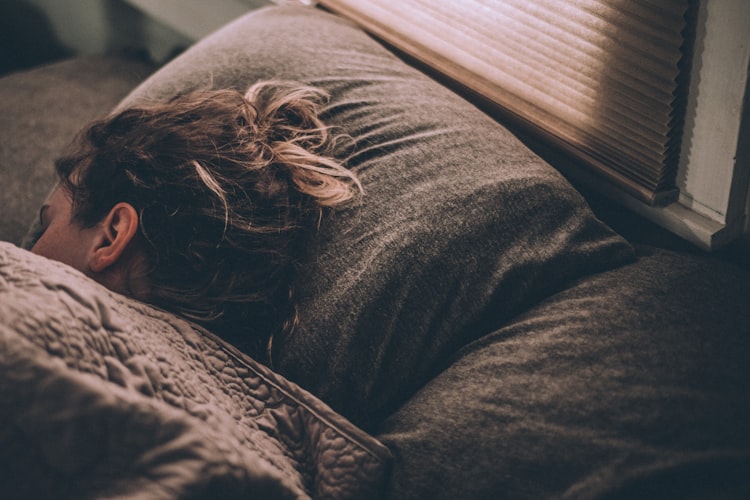 Mental illnesses are, unfortunately, quite common in today’s society. They are often hard to directly diagnose, take months if not years to treat, and as you might imagine – lead to a whole host of sleeping problems.
Conditions like stress, anxiety, and depression are regularly considered both causes and consequences of common sleep disorders, further cementing the deep connection between these two types of disorders. In this article, we wish to illustrate how depression and other mental illnesses can lead to severe sleeping problems and vice-versa.
Our goal is to paint a clear picture that encourages those of you with mental health problems to seek out help as soon as possible, for your own good. Let’s examine things:
The Vicious Cycle of Sleep Disruption
Mental illness and sleep disruption are often comorbid. Let’s imagine a scenario where you’re a person who has to deal with a mental illness. It’s exhausting and painful and can ruin your life in many ways. One of the main direct consequences of such a condition is an increased amount of stress and anxiety during the day.
Everything negative seems to affect you that much more, and the stresses of a working schedule and social pressures weigh down on you even when you should be relaxing and falling asleep. As a result, it takes you longer and longer to fall asleep, and you wake up in the middle of the night many times.
Once the time comes where you must go to work, you’re exhausted. You didn’t even come close to the recommended 8 hours of sleep, and now you’re at work, unfocused and tired. Tired people are irritable and more vulnerable to conditions like stress, anxiety, anger, and aggression, etc.
Unfortunately, those same conditions can cause new mental health issues and amplify existing ones, especially if they add up over time. It’s not a fun situation to be in, especially if you carry a lot of responsibility in your daily life.
Statistics and Conclusions
So now we have a person that is stuck in a loop, where they’re constantly stressed out, anxious, depressed, and unable to get enough rest, and this vicious cycle keeps repeating. As a result, we encounter statistics that show that 20% of depressed individuals also suffer from sleep apnea, and 20% of patients with sleep apnea also experience at least mild to moderate depression.
A connection can also be drawn between the mental health of teenagers and their frequently disrupted sleep-wake schedules. While there are other factors that affect the sleep quality of these teens, such as the increased exposure to blue light and various sources of electronic entertainment over the years, it cannot be disputed that their anxiety, stress and potential depression contribute to poor sleep, and vice-versa.
It’s not all bad news, however. Recent research results from around the globe are showing promise, as clinicians everywhere are starting to develop more personalized treatment methods for a variety of mental illnesses.
No two people are the same, and the more we can tailor our treatment plans to each individual patient, the more success we will see in the long run.
Our advice to anyone with mental health conce
s is to seek out a doctor as soon as possible, so your conditions can finally be diagnosed and treated properly, and you can enjoy your day that much more.
Mental illnesses are, unfortunately, quite common in today’s society. They are often hard to directly diagnose, take months if not years to treat, and as you might imagine – lead to a whole host of sleeping problems.
Conditions like stress, anxiety, and depression are regularly considered both causes and consequences of common sleep disorders, further cementing the deep connection between these two types of disorders. In this article, we wish to illustrate how depression and other mental illnesses can lead to severe sleeping problems and vice-versa.
Our goal is to paint a clear picture that encourages those of you with mental health problems to seek out help as soon as possible, for your own good. Let’s examine things:
The Vicious Cycle of Sleep Disruption
Mental illness and sleep disruption are often comorbid. Let’s imagine a scenario where you’re a person who has to deal with a mental illness. It’s exhausting and painful and can ruin your life in many ways. One of the main direct consequences of such a condition is an increased amount of stress and anxiety during the day.
Everything negative seems to affect you that much more, and the stresses of a working schedule and social pressures weigh down on you even when you should be relaxing and falling asleep. As a result, it takes you longer and longer to fall asleep, and you wake up in the middle of the night many times.
Once the time comes where you must go to work, you’re exhausted. You didn’t even come close to the recommended 8 hours of sleep, and now you’re at work, unfocused and tired. Tired people are irritable and more vulnerable to conditions like stress, anxiety, anger, and aggression, etc.
Unfortunately, those same conditions can cause new mental health issues and amplify existing ones, especially if they add up over time. It’s not a fun situation to be in, especially if you carry a lot of responsibility in your daily life.
Statistics and Conclusions
So now we have a person that is stuck in a loop, where they’re constantly stressed out, anxious, depressed, and unable to get enough rest, and this vicious cycle keeps repeating. As a result, we encounter statistics that show that 20% of depressed individuals also suffer from sleep apnea, and 20% of patients with sleep apnea also experience at least mild to moderate depression.
A connection can also be drawn between the mental health of teenagers and their frequently disrupted sleep-wake schedules. While there are other factors that affect the sleep quality of these teens, such as the increased exposure to blue light and various sources of electronic entertainment over the years, it cannot be disputed that their anxiety, stress and potential depression contribute to poor sleep, and vice-versa.
It’s not all bad news, however. Recent research results from around the globe are showing promise, as clinicians everywhere are starting to develop more personalized treatment methods for a variety of mental illnesses.
No two people are the same, and the more we can tailor our treatment plans to each individual patient, the more success we will see in the long run.
Our advice to anyone with mental health conce
s is to seek out a doctor as soon as possible, so your conditions can finally be diagnosed and treated properly, and you can enjoy your day that much more.Further reading
Further Reading
Article
Best Focus Supplements for Professionals: Apex Performance Life Releases Cognitive Enhancement Supplement with Natural Nootropics
Apex Performance Life has announced the launch of LucidFlow, an innovative brain health supplement specifically engineered for knowledge workers, executives, entrepreneurs, and academics who demand peak mental performance. The formula represents a breakthrough in neurocognitive enhancement, offering professionals a natural alternative to traditional stimulants while delivering superior cognitive benefits. More information can be found at https://apexperformance.life . Address
October 31, 2025
Article
What is CBD Oil? Uses, Benefits and Side Effects
CBD is a chemical compound that can be extracted from the Cannabis plant. It's non-psychoactive, so it won't have any of the hallucinogenic effects that THC has. The cannabinoid is believed to have many medical benefits including pain relief and anti-inflammatory properties. It's also been shown to help with anxiety and depression. CBD oil is something that a lot of people aren't familiar with. In particular, What is CBD Oil? Uses, Benefits, and Side Effects Articles on how i
November 27, 2023
Article
Feeling Empty Inside: Eating Disorders
There is more to eating disorders than food — it’s about body image and triggers that are often associated with trauma, loneliness, low self-esteem, and interpersonal issues. While some people may question whether eating disorders cause loneliness or loneliness causes the eating disorder — the answer is it’s both. There is a tie between low self-esteem and loneliness, which both feed feelings of emptiness inside. While some may eat in an attempt to feel less empty or to eat
October 19, 2023
Website
Kareen Haynes Therapies
EFT, Hypnotherapy, NLP, Time Line Therapy, and Matrix Reimprinting.
September 24, 2023