Diane England,
Ph.D., LCSW
Official Guide
Dr. Diane England is a Post-Traumatic Stress Disorder (PTSD) Relationship Self-help Author and Expert
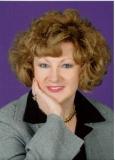
Diane England, Quick Facts
- Main Areas
- Because partners of those with Post-Traumatic Stress Disorder or PTSD suffer right along with their loved ones, Dr. Diane England addresses the needs of couples impacted by the presence of PTSD—the “PTSD relationship.”
- Best Sellers
- Dr. Diane England’s self-help book, "The Post-Traumatic Stress Disorder Relationship: How to Support Your Partner and Keep Your Relationship Healthy," was designated one of the “BEST BOOKS OF 2009” by the "Library Jou al." Furthermore, it was one of only three self-help books to make the "Library Jou al" list. By the way, you can help to ensure this book makes a true difference in the lives of many enduring “PTSD relationships” by telling everyone you know about this book—not just those couples who’ve obviously been impacted by this mental disorder. After all, you never know who may be suffering silently and needlessly because of PTSD.
- Career Focus
- : Author and Writer/ Speaker/Workshop or Seminar Facilitator/Consultant
- Affiliation
- Licensed Clinical Social Worker
Meet Dr. Diane England, Ph.D.
When Diane England was first approached by an acquisitions editor from Adams Media to write one or more books about a mental health disorder and how it impacted a couple's relationship, plus to give concrete advice on how to improve matters, she knew she could best help couples by writing about "PTSD relationships." Furthermore, Dr. Diane England knew, as sad as it was, that military members, National Guard members, and Reservisits who'd seen active duty in the war zones of Afghanistan and/or Iraq--and esepcially mutiple times--would become many of the future PTSD sufferers whereas once, they tended to be people who'd bbeen in car accidents. While this book was written for the partner of anyone PTSD sufferer and not merely for partners of wounded warriors, Dr. England was especially conce ed about the future well-being of "PTSD relationships" involving wounded warriors not only because of the growing number there would be of these, but also because theyd be some of the most complex and challenging PTSD cases. As a civilian clinical social worker who'd worked with military members and their families at a base in northern Italy during wartime, she had a particular conce about war veterans and their loved ones.
An Unexpected Re-Introduction to Warriors Wounded by PTSD
While Diane England, Ph.D. had arrived in Italy expecting relative tranquility throughout her tenure in Italy, she soon found herself answering questions the Medical and Support Group Commanders raised regarding how to best protect those in a war zone from develping PTSD. Dr. Diane England shared their conce s because, due to her age, she'd seen how many soldiers, after fighting in the Vietnam War, had gone on to experience numerous personal as well as relationship issues. She didn't want to see this generation's war veterans endure the same fate--especially because, unlike back then, mental health professionals knew about Post-Traumatic Stress Disorder symptoms and could offer effective cognitive-behavioral therapies as well as medication for PTSD. While Dr. England knew that many military members were disinclined to seek help for mental health issues, she had made progress duting her time in Italy in promoting the message that help-seeking behavior was a sign of strength versus weakness. In newspaper articles she 'd written, on Armed Forces Network Radio (AFN), and in numerous speaches to military memners in the course of implementation of both domestic violence and suicide prevention initiatives she managed, Diane England, Ph.D. had stressed that untreated mental health issues typically worsened and became even more challening yet to treat. Thus, she'd continually encouraged our young men and women in unifo to seek professional help versus to just "suck it up" as military members were often so inclined to do instead.
More than a Clinical Social Worker or Psychotherapist
Dr. Diane England began to sense that her entire career had prepared her to write this self-help book that, while it might be average in length, is nevertheless jammed packed with information, exercises, and case studies--the latter typically modeling a skill you as the reader will need to develop in order to cope more effectively with a partner's changed behavior due to PTSD symptoms. But then, she possessed the academic credentials one would expect of a self-help author--a Ph.D. from the University of Texas at Arlington in clinical social work, a Master of Science degree in family studies from Oregon State University, and a Bachelor of Science degree in child development from the University of Maine.
This New Jersey native, now a resident of New Hampshire, had gained, while working for the military, the knowledge and comfort level needed to discuss two issues often confronted by couples impacted by PTSD--domestic violence and suiicde risk. As an adjunct faculty member at the University of Texas at Arlington, Dr. Diane England had taught anger management courses for couples--assisted by graduate students she supervised. Prior to that, she had developed training modules, manuals, and conferences for the national center for the second largest voluntary health organization. She had managed patient services and professional education at the state level in Oregon for what was the largest voluntary health organization. Furthermore, she had begun her professional career with the Cooperative EXtension System, serving first as an Extension Agent and later, as the first Child Dvelopment and Family Relations Specialist at the University of Idaho Extension Service. This had given Diane England, Ph.D. the opportunity to educate adults on how to create healthier families and better lives--within this organization in which the federal, state, and local governments all cooperated.
Will You Embrace Dr. Diane England's Mission to Help those Impacted by PTSD?
Diane England sincerely hopes that all her professional as well as life experiences, such as dealing with a professional spouse's addiction problems and resulting emotional abuse and verbal abuse, have allowed her to author a book that will truly speak to and benefit you if you and your partner are struggling with changed lives and a changed relationship because of the unwanted guest of PTSD. Of course, while this book is written to especially help you, the partner of the PTSD sufferer, it could nevertheless help anyone who wants to learn more about PTSD, its treatment, and ways to support the PTSD sufferer. So, if you are a friend or a family member of someone coping with this debilitating disorder, chgeck out the book. Also, sufferers as well as therapists can benefit from reading The Post-Traumatic Stress Disorder Relationship: How to Support Your Partner and Keep Your Relationship Healthy. Discover more about the book and Dr. Diane England here: www.PTSDRelationship.com.
Free Articles & Book Excerpts
Diane England, Books
Articles by this expert
SelfGrowth articles and saved writing connected to this expert. Showing 12 of 14.
Article
When You Decide To Be Codependent No More, You Won't Want Emotionally Unhealthy People In Your Life
Could your codependency or another emotional issue be the reason you want someone back who left you? When you are codependent, you are typically looking outside yourself for definition or a sense of self. It might be through material things or the roles you play in life, for example. You might ...
Recently added
Article
Married To A Narcissist And Waiting For Good Times To Return?
n When you said your vows, what were you expecting? I suspect if you were like most women, you thought you were entering a partnership. You would enjoy shared power, right? I bet you’ve discovered something quite different, though. I bet he likes to have power over you, isn’t that so? And to ...
Recently added
Article
***Are You Angry or Depressed Because Your Partner has Post-Traumatic Stress Disorder or PTSD?
Does your partner refuse to do practically anything with you anymore even though you used to go everywhere together? Do you find verbal abuse being slung your way when your partner used to be a kind person? Are you confused by a suddenly sexless marriage when your partner couldn’t keep his hands ...
Recently added
Article
***Are Your Beliefs Your Friend or Foe?
Are you aware that you operate under certain beliefs and assumptions that help you to make sense of this world and your life experiences, and that also guide you as you maneuver through each day? Perhaps you’re very much aware of the fact that you have such a framework—often referred to as a world view. For example, you may believe that you were put on this earth for a God-given purpose. Hence, you’re striving to understand and adhere to what that purpose is.
Recently added
Article
***Post-Traumatic Stress Disorder: Struggling to Get a Wounded Warrior to Seek Treatment?
Are you conce ed because you suspect your partner, a family member, or a friend back from the war zone has Post-Traumatic Stress Disorder but refuses to seek treatment? While any Post-Traumatic Stress Disorder sufferer might respond in this way, male wounded warriors—wounded by Post-Traumatic ...
Recently added
Article
Is Codependency Turning You Into Someone You Never Intended To Become?
Who is the author most identified with the concept of codependency and the codependent? I suspect it is Melody Beattie. She herself was a recovering alcoholic and drug addict when, while working in a treatment facility in Minnesota, she was asked to hold groups for spouses of their alcoholic ...
Recently added
Article
Codependent No More-So You're Not Covering Up for Your Alcoholic Spouse this Holiday Season, Isn't that Right?
How does having an alcoholic spouse affect your holiday season? Is this a time of year you dread because you have to attend parties with a partner whom you fear will get drunk and then behave badly? In fact, do you turn down invitations when you’d prefer to be socializing and celebrating the season, all because of the risk of embarrassment or worse caused by your alcoholic spouse? Some might profess me fortunate. My alcoholic husband didn’t much like to socialize. Actually, that might not be too surprising.
Recently added
Article
Book Review: The Post Traumatic Stress Disorder Relationship
This book has been designated one of the "BEST BOOKS OF 2009" by the Library Jou al. This book review is part of a series that covers the topic of Post-Traumatic Stress Disorder. Post-Traumatic Stress Disorder (PTSD) is an anxiety disorder that can develop after exposure to a terrifying event or ordeal in which grave physical harm occurred or was threatened. Traumatic events that may trigger PTSD include violent personal assaults, natural or human-caused disasters, accidents, or military combat. Dr.
Recently added
Article
***Women, Sexual Assault, and Post-Traumatic Stress Disorder (PTSD)
About fifty percent of women will experience trauma at some point during their lifetimes that may or may not lead to the mental disorder known as Post-Traumatic Stress Disorder or PTSD. However, one of the more common forms of trauma that women experience, and one that often does lead to PTSD, is sexual assault. In fact, did you know it’s estimated that one third of women will ultimately experience a sexual assault? There is not a consensus, however, as to what percentage of these women will develop PTSD.
Recently added
Article
What's The Prognosis For Your Verbally Abusive Relationship Or Marriage?
Has verbal abuse infiltrated your relationship or marriage to the extent you're ready to do something about it? Perhaps you intend to suggest marriage counseling to your husband? Or, before you do that, do you suppose if you tell him how much his verbal abuse hurts you emotionally, he will drop ...
Recently added
Article
Living A Life Based On Spirituality Or Walking The Spiritual Path Isn’t Always Easy
Have you ever sat home day after day writing? I know, most people probably think it would be great fun. I thought that way for awhile. But perhaps because I was doing it in rural New England, I found it more and more isolating. Should I get a job and do the writing at night and on weekends ...
Recently added
Article
Have A Pleasant Family Holiday Season In Spite Of Your Narcissistic Husband's Behavior
Are you dreading the holiday season, believing you can not have a pleasant family holiday, because your narcissistic husband has a way of making you feel nothing you have done is good enough? Or, perhaps he despises this time of year and wants you and the kids to join him in his misery? Well, I ...
Recently added
Websites & resources
SelfGrowth-published websites, downloads, and contributor profile websites connected to this expert.
Favorite Quotes & Thoughts from Diane England,
Do You know what I'm envisioning? A viral email campaign that begins on the day The Post-Traumatic Stress Disorder Relationship lands on bookstore shelves, or beginning August 18, 2009, that might go on for months. You know how you see jokes end up in your email that you're certain you first read ages ago? I'd like to see something like this happen with regard to this book.
Why? you ask. Because, as sad as it is, PTSD is going to be impacting individuals, couples, families, and communities for years to come because, not only will people continue to develop PTSD after experiencing traumatic events such as car accidents as they always have, but we're going to be dealing with complex PTSD cases in many returning from the war zones of Afghanistan and Iraq. To ensure that they and their loved ones don't suffer needlessly, I'd like them to know about The Post-Traumatic Stress Disorder Relationship as well as other resources I've listed at my website --and will be adding to as the months go on. Since many people disregard information until they are in need of it, it's important to alert people as to the availability of this self-help book and resources regularly.
Getting this type of information out there, and in turn, supporting those who need help coping with PTSD's destructiveness, could be a good trhing for our society as a whole, too. After all, as I demonstrate through a case study in the book, we know that the PTSD sufferer can harm not only the partner, but can also harm the children emotionally. Thus, they are apt to grow up and harm their own children in this way. However, by becoming part of this ongoing email campaign, you may help keep such a scenario from unfolding. And truthfully, wouldn't you feel good about being part of something that could make such a difference? Well, and especially when it requires so little of your time?
Remember, anyone can write a great book believing he or she can make a difference through those written words. Of course, I want to believe The Post-Traumatic Stress Disorder Relationship can have a positive impact on many lives. However, no book will ever achieve its potential if it never reaches the hands of those it is meant to serve. But to accomplish this feat today, an author needs the help of others--just as I need your help. Working together, we can make a significant difference. Indded, working together in this way, we can help ensure that PTSD does not deliver the painful legacy that it did after the Vietnam War. Together, we can ensure that PTSD sufferers and their families have the information and skills they need to slay this dragon!
If you'd like to make a difference in this way, contact me about becoming part of such a viral email campaign by using the form located at the bottom of this page: www.ptsdrelationship.com/ShareYourPTSDStory.html. Then again, before you do so, read what experts have had to say about The Post-Traumatic Stress Disorder Relationship.
Experts' Recommendations
for The Post-Traumatic Stress Disorder Relationship
“The Post-Traumatic Stress Disorder Relationship is truly the toolbox the partner of a PTSD sufferer needs if he or she wants to help save the partner, their relationship, and their children from the potentially devastating consequences of this disorder.”
-
Jesse J. Harris, PhD, Colonel, U.S Army Retired, Former Social Work Consultant for the Army Surgeon General; Professor and Dean Emeritus, School of Social Work, University of Maryland, Baltimore; and a Recipient of the National Association of Social workers Lifetime Achievement Award
"This is a book overflowing with information, sound advice, and exercises to help you turn what might seem like a tragedy into a springboard for personal and relationship growth."
- Rene´ J. Robichaux, PhD, LCSW, Colonel, US Army Retired, Former Social Work Officer and Chief, Behavioral Health Division, US Army Medical Command
“My clients often say, "We've been through this. Things get better for a week or a month, but then we're right back to where we started." Many self-help books provide a feel good experience by giving a quick infusion of empathy. Yes, it's very important to feel that you are not alone. However, this book goes far beyond this, providing tools for lasting change.”
-
Carl G. Hindy, PhD, Clinical Psychologist, Nashua, NH. Co-author of "If This Is Love, Why Do I Feel So Insecure? For more information, visit www.hindyassociates.com
“Full of sound information as well as useful case studies and exercises, this book is going to be a welcome road map for the partner who wants to support a loved one with PTSD—a must read.”
- Colonel Robert I. Miller, MD, Commander of Malcolm Grow Medical Center, Andrews Air Force Base, Maryland
“Dr. Diane England has written a comprehensive book that will answer all of the questions that arise when in a relationship with someone affected by PTSD.”
- David Riklan, Founder of SelfGrowth.com, the # 1 Self Improvement Website on the Inte et
“I wish I’d had The Post-Truamatic Stress Disorder Relationship as a resource when I began working solely with America's combat veterans at the Denver VA Medical Center. This book provides a comprehensive and insightful description of the challenges that PTSD inflicts on the sufferer, the partner/spouse, their children, family and friends. It is a must read for clinicians (particularly in the Department of Defense and the Department of Veterans Affairs), those wounded by PTSD and those in their circle of life. It not only leads to a thorough understanding of PTSD but offers direction for healing for all conce ed.”
- Calvin Neptune, PhD, LCSW, Colonel, US Army Retired, Former Social Work Consultant, Office of the Army Surgeon General. Also recently retired clinical social worker with the PTSD Residential Rehabilitation Program, Denver VA Medical Center
“Dr. Diane England has performed an invaluable service for so many by writing this superb, comprehensive guide to relationships where PTSD is present. She has developed a unique pragmatic systems approach, thus making this a practical “how to” guide that will promote human welfare for many as well as contribute to the literature on PTSD. Well done, Dr. England!”
- Ernest J Lenz, PhD, MPH, Colonel, US Army Retired, Former Psychology Consultant, US Army, Europe
“The Post-Traumatic Stress Disorder Relationship should be required reading for everyone who knows someone affected by PTSD. It is a treasure chest of tools that can be used for life to help oneself, their partner and their children understand and deal with the devastating consequences of PTSD.”
- Richard Miller, PhD, clinical psychologist and developer of Integrative Restoration (iRest), a program designed to help people develop resiliency to, as well as heal through, PTSD and its related symptoms—currently being used in VA facilities, hospitals, homeless shelters, prison and clinical settings
“The Post-Traumatic Stress Disorder Relationship is destined to provide extraordinary service to couples who have suffered in silence from this devastating disorder. Now, with Dr. Diane England’s help, couples can fully understand the nature of Post-Traumatic Stress Disorder, how it affects their relationship, and what to do about it. Relationships are challenging anyway, and these relationships are even more so. Fortunately, this book shows that you don't have to personalize what is happening but instead, can step back and take action to improve your relationship and life together. Therefore, if you love someone with PTSD, get this book and begin following its advice today! If you treat people with Post-Traumatic Stress Disorder, I recommend this book as part of their treatment plan.”
-
Nina Atwood, M.Ed., LPC, author of four self-help books, including "Soul Talk: Powerful Positive Communication for a Loving Partnership,” and her latest, “Temptations of the Single Girl: Ten Dating Traps You Must Avoid”
A MUST READ book for behavioral health professionals, as well as anyone who has, or might have, a partner who is suffering with PTSD. This very well written book offers vital help and hope to deal with PTSD in relationships—in a most realistic, practical, clear and immediately applicable manner.”
- Gregory C. Meyer, DSW, Colonel, US Army Retired, former Social Work Consultant, HQ 7th Medical Command, US Army, Europe
Dr. Diane England's "The Post-Traumatic Stress Disorder Relationship" is on the "Resources and Recommended Readings" list for the Program for Anxiety and Traumatic Stress Studies at Cornell University's Weill Cornell Medical College. Click here and note that her book is the sixth one listed: www.patss.com/resources.
Contacting Diane England,
Please contact Dr. England via the appropriate form on her website or call her at the phone number listed if you are interested in talking about services she might provide your organization or business. And remember, while you are at the site, sign up for her free newsletter so Diane England, Ph.D. can share information about PTSD or regarding The Pos-Trumatic Strress Disroder Relationship such as related events or workshops.
- Here is the link for the PTSD Relationship Newsletter: www.ptsdrelationship.com/PTSDnewsletter1.html
- Here is the link for the contact form which you can also use to share your PTSD story: www.ptsdrelationship.com/ShareYourPTSDStory.html
Because PTSD Harms the Sufferer, the Partner, and their Relationship,
Do Yourself, a Family Member, or a Friend a Favor.
Check Out and Buy My New Book Now at the Link Below:
www.ptsdrelationship.com/BuythisPTSDBook1.html
Also, tell your other friends about it because you never know who might be suffering silently and needlessly. And that wouldn't be a good thing, would it?"
Working together, we can make a significant difference. Thus, I thank you!
Diane England, Ph.D.
How to get started
Want to learn more about Dr. England's self-help book and the services she offers? Visit her website, www.PTSDRelationship.com, and while you are there, do the following:
- Review the list of self-help books Dr. Diane England recommends becaue some could prove helpful--depending upon the issues you and your partner are facing due to the presence of PTSD in your relationship.
- Check out the links she has listed to locate helpful information and resources on the web that could benefit the two of you--or help you better serve clients if you're a therapist reading this.
- If your partner is a warrior wounded by PTSD but was misdiagnosed and, as a result, has another diagnosis on his or her medical records that you want to get changed, read Dr. Diane England's article that provides helpful information--including where you may be able to get free legal advice.
- Sign up for Diane England's FREE newsletter so you remain aware of helpful new information she may wish to forward.
- If you have a story to share about living with a partner with PTSD, click on the "Share Your Story" link and submit it. Of course, Dr. Diane England would prefer that you purchase, read, and put into practice some of the tools she recommends in The Post-Traumatic Stress Disorder Relationship first so that in a future book, she can expand upon what worked best for the majority of PTSD-impacted couples. While you don't have to forward a success story, she'd like to review these in particular so she can instill hope in others--that they might continue to walk the often challenging pathway to revovery from PTSD as your story will assurue them is a wothwhile endeavor.
Other highlights
Addictions, Abuse, Codependency, And Recovery via Personal Development and Spiritual Growth
Prior to writing The Post-Traumatic Stress Disorder Relationship, Dr. Diane England authored articles that have appeared on this and other websites that dealt with the above topics as well as narcissism--since narcissism, addictions, and abuse were often evident in the same individual. The partner, on the other hand, was often seen by mental health professionals as codependent or suffering from codependency. While Post-Traumatic Stress Disorder, addictions, and abuse often occur together as well, we should hold out more hope for the PTSD sufferer engaging in and changing as the result of treatment than we should for individuals with pathologcal levels of narcissism--who likely have a personality disorder instead. It is known as Narcissistic Personality Disorder or NPD.
Usually NPD, typically evident by early adulthood, is not effectively treated. The behavior of the NPD sufferer, typically a man, tends to be relatively consistent throughout his lifetime--such as he will be emotionally or verbally abusive with one partner after another. On the other hand, the PTSD sufferer's behavior is changed by PTSD which may well be responsive to treatment.Thus, while the addictions and abuse of the PTSD sufferer can still cause damage and harm others besides the sufferer, if the PTSD victim is actively participating in a treatment regime, you should hold out hope for improvement.
To learn more about PTSD, addictions, and abuse as well as how to support your PTSD-suffering partner while protecting your own mental and physical well-being, read The Post-Traumatic Stress Disorder Relationship. You might want to read what other experts have had to say about it below,or go now to: www.PTSDRelationship.com.
What to know more about his narcissism, addictions, and abuse as well as her codependency and recovery? Find articles as well as self-help books you'd undoubtedly enjoy reading at the links below: