7 Things Every Parent Should Know About Montessori Education
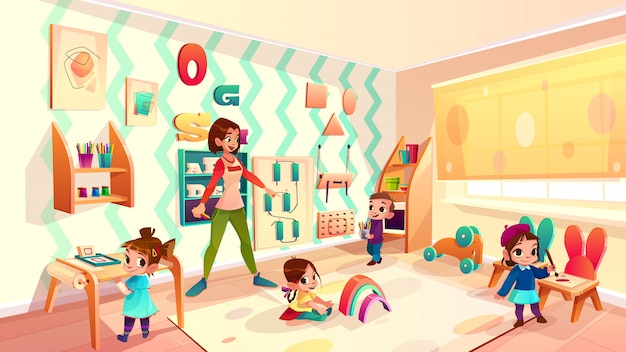 You have undoubtedly heard of the world-renowned Montessori school of thought. It is one of the most popular educational curricula on the planet, and for a good reason. It challenges what many cultures think of traditional educational success and brings fresh, new perspectives to modern learning. It has also become perhaps the most popular choice for international schools worldwide.
However, there is a lot that parents don’t know about this educational system. What does it entail? How is it different from other curricula? And, perhaps most importantly, will it be the right fit for my child?
Here’s what you need to know about this popular choice for schooling before sending your child to a Montessori international school:
You have undoubtedly heard of the world-renowned Montessori school of thought. It is one of the most popular educational curricula on the planet, and for a good reason. It challenges what many cultures think of traditional educational success and brings fresh, new perspectives to modern learning. It has also become perhaps the most popular choice for international schools worldwide.
However, there is a lot that parents don’t know about this educational system. What does it entail? How is it different from other curricula? And, perhaps most importantly, will it be the right fit for my child?
Here’s what you need to know about this popular choice for schooling before sending your child to a Montessori international school:
Teachers Don’t Teach - They Guide
In the Montessori educational model, teachers are often referred to as “guides”. This is because the traditional role of the teacher - a person standing in front of a group of students and delivering a lesson or lecture - is turned on its head in this model. Instead of giving a lesson to the entire class, teachers exist to work one-on-one with students and guide them through what they are learning and what they are practicing afterwards.Children Learn Together - and From Each Other - in Mixed-Age Groups
Another big difference between traditional education systems and Montessori models is that in the Montessori classroom, students will be grouped with others who may be older or younger than they are. Older students may contribute to the teaching of younger children, the same way a sibling or older friend in a playgroup might. This is a more natural form of childhood interaction and behavior and is translated into the learning environment in a way that makes peer cooperation a focus.Learning is Meant to Be Experiential - and The Environment is a Tailored One
In the traditional classroom, children may see and hear about many things, but in the Montessori environment, the goal is for them to experience them. This means an environment that is tailored to engaging the senses and inspiring participation and hands-on learning. The classroom is often called “the prepared environment” for this reason, since children are able to be more interactive in this space than in a traditional learning environment.Work Time is Intense - and Consolidated
While many people think that children in a Montessori school spend their whole day playing, there is actually a lot of work happening. The difference is, that work isn’t broken up into short bursts and divided by subject. Instead, children have long periods - usually two or three hours at a time - during which they can work on their coursework. This allows them to engage more deeply and focus more intently.Structured Freedom is Key
The Montessori approach is famous for providing freedom to children. This doesn’t mean, however, that they can run around the room, distract their peers, or do whatever they please at any time. Instead, it means offering guided and supervised freedom via a set of choices for each given activity. During work time, for example, students must focus on their work. However, they can choose which subject to work on and in which order, as well as where they sit and how. As long as they are participating without distracting others, their actions are within the boundaries of the rules, giving them more personal freedom than most classrooms can.The Senses and Practical Skills are Important
In addition to the fundamental skills of language, mathematics, science, and civics or social studies, children in the Montessori environment also have two additional elements of their curriculum. These are practical skills and sensory education, both of which are seen as crucial to their development and, therefore, their education. In practical skill-building, children will learn everyday skills that are necessary for good health, strong social bonds, care of the home environment, and much more. This may include everything from motor skill practice and learning important information about self-care to practising tying the shoes and using good manners when interacting with peers and authority figures. These are seen as indispensable parts of the Montessori education. Likewise, sensory skills are very important to the Montessori teacher. They help their young students develop their sight, hearing, and other senses through play-based, experiential learning - and use those senses to better understand and learn about the world around them.Educating Each Child Individually and Entirely is the Goal
The focus on the “whole” child is central to Montessori’s style. It stresses the importance of nurturing a child’s mind, body, and spirit so that all of these aspects of the student’s self can work in harmony. This creates happier, healthier students who benefit more from their education. Students also received individually-tailored instruction, since Montessori “guides” will typically educate students in small groups or on a one-on-one basis. This means that lessons take much longer, but then the children who have already received instruction are free to work independently and self-monitor, giving the teacher time to spread their attention around the room and provide for each child’s individual instructional needs. If you are considering Montessori instruction for your child, you certainly aren’t alone. While it isn’t the perfect fit for every student or family, it is a great way to foster and improve your child’s ability to work independently, focus in academic settings, collaborate with peers, and make meaningful decisions for themselves. For many parents, that’s exactly what they’re looking for - and exactly why so many choose Montessori schools, year after year!Further reading
Further Reading
Article
Visual Communication Design vs Graphic Design: Key Differences Between the Two Disciplines
Design has been at the centre of our perception of information, brands and entertainment in the world that is now digital first. Whether you browse social media, watch YouTube videos, or pass a billboard, you probably have encountered both visual communication design and graphic design, yet most likely, you were not aware of the distinction between the two. Although these two fields are closely related and in many instances overlap, they have different purposes and require di
July 21, 2025
Article
Dr. Ann Marie Egloff Provides A Step-by-Step Guide for Starting Your Philanthropic Journey
Dr. Ann Marie Egloff understands that engaging in philanthropy isnât about just donating funds; itâs about the values and intention behind that action. Whether youâre donating money, volunteering time, or sharing your skills, giving back can take many forms and fit into any lifestyle. According to Dr. Ann Marie Egloff, the most rewarding experiences often come from aligning your efforts with causes that resonate personally. By clarifying your motivations, setting though
May 27, 2025
Article
Why Guitar Lessons Are the Key to Mastering the Instrument
Learning to play the guitar is an exciting and rewarding experience. Whether you’re a complete beginner or have been playing for years, guitar lessons can help you unlock your full musical potential and take your skills to the next level. But what exactly do guitar lessons offer, and how can they benefit you? Let’s dive in! 1. A Structured Learning Path One of the biggest advantages of taking guitar lessons is the structure they provide. While it’s easy to get lost in the s
February 1, 2025
Article
Why Choose a CBSE School? Key Insights for Parents
SVPT Saraswati School is widely regarded as one of the Best CBSE Schools in Thane, offering a holistic and well-rounded education that goes beyond academics. Situated in a peaceful and conducive learning environment, this institution provides a blend of modern infrastructure, dedicated faculty, and extracurricular activities, ensuring that students develop both academically and personally. A Legacy of Excellence in Education:rnSVP Saraswati School has built a reputation over
November 26, 2024