Dietary Supplements for Athletes in High Doses â Good or Bad?
Types of Dietary Supplements for Athletes and Their Safety
Strength Increasing: Growth Stimulation and Tissue Recovery
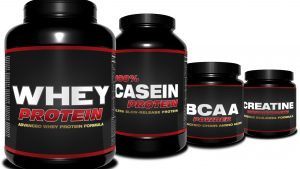 A large number of such supplements are sold under the guise of "anabolic" or "anti-catabolic" agents that have a direct or indirect effect on the synthesis of proteins in the muscles.
The mechanisms of action include affecting the metabolic pathways by increasing the availability of amino acids, stimulating hormones release or enhancing the hormonal action.
Among the supplements in this category are: amino acids, boron, chromium, chrysin (yellow pigment from poplar buds), colostrum, creatine, hydroxymethylbutyrate (HMB), ornithine alpha-ketoglutarate, proteins, vanadium, and zinc.
Despite the fact that protein and amino acid products are the most popular in this group, sales of creatine (used only in sports nutrition) and some other supplements are high enough.
A large number of such supplements are sold under the guise of "anabolic" or "anti-catabolic" agents that have a direct or indirect effect on the synthesis of proteins in the muscles.
The mechanisms of action include affecting the metabolic pathways by increasing the availability of amino acids, stimulating hormones release or enhancing the hormonal action.
Among the supplements in this category are: amino acids, boron, chromium, chrysin (yellow pigment from poplar buds), colostrum, creatine, hydroxymethylbutyrate (HMB), ornithine alpha-ketoglutarate, proteins, vanadium, and zinc.
Despite the fact that protein and amino acid products are the most popular in this group, sales of creatine (used only in sports nutrition) and some other supplements are high enough.
Proteins and Amino Acids
Athletes often claim that they need an increased amount of protein for muscle mass growth, but literary sources do not confirm this hypothesis. This can be explained by Milford's adaptive model of metabolic needs, which suggests that the body adapts to either high or low consumption and that such adaptation to changes is very slow. With a high protein intake, increased regulation of protein breakdown and oxidation of amino acids begins. With a sharp reduction in protein intake, an athlete accustomed to high levels of protein experiences a loss in muscle mass until a balance is reached.Prohormones and Related Compounds
Researches showed that testosterone prohormones (4-androstenedione, 1-androstenediol (1-AD) only slightly increase the level of testosterone in the blood in young men and do not increase the body strength or muscles mass. Besides, these dietary supplements can be a significant health hazard and lead to positive doping test results.Herbal Supplements
According to experts, many plant supplements increase the level of testosterone and, therefore, have an anabolic effect. These include Tribulus Terrestris, chrysin, indole-3-carbinol, saw palmetto, gamma-oryzanol, yohimbine, sarsaparillas, and mumie. In recent research, it was revealed that drugs or supplements containing Tribulus Terrestris, chrysin, indole-3-carbinol, palmetto along with androstenedione and androstenediol have not been shown to increase testosterone concentrations and do not affect muscle growth compared to power training (Brown et al., 2000a, b, 2001a, b). Available clinical research data indicates that such plant extracts are of no value for this purpose.Stimulation of Energy Production
Dietary supplements that improve performance by enhancing energy production include bicarbonate, caffeine, carnitine, creatine, guarana, hornet juice, iron, magnesium, pyruvate, ribose. The effectiveness of not all of these dietary supplements was clinically proven. There are reasons to believe that in certain situations, some athletes can benefit from the use of bicarbonate, caffeine, creatine.Antioxidants
 Several studies have examined the effect of antioxidant supplementation on the ratio of muscle damage caused by free radicals during exercise, and there is evidence of the protective effect of them (Kanter, 1995; Dekkers et al., 1996).
Data suggest that taking supplements may reduce signs of muscle damage, but there is no evidence of a beneficial effect on performance. Negative effects of antioxidants are also possible since some of them can act as oxidation accelerators (pro-oxidants).
The toxic effects of high doses of antioxidant supplements are unlikely, but there is a possibility of the adverse effects of prolonged taking high doses of one antioxidant. One study reported an increase in muscle damage during exercise after taking ubiquinone supplements (Malm et al., 1996). Many dietary antioxidants in high doses are able to act as pro-oxidants.
Several studies have examined the effect of antioxidant supplementation on the ratio of muscle damage caused by free radicals during exercise, and there is evidence of the protective effect of them (Kanter, 1995; Dekkers et al., 1996).
Data suggest that taking supplements may reduce signs of muscle damage, but there is no evidence of a beneficial effect on performance. Negative effects of antioxidants are also possible since some of them can act as oxidation accelerators (pro-oxidants).
The toxic effects of high doses of antioxidant supplements are unlikely, but there is a possibility of the adverse effects of prolonged taking high doses of one antioxidant. One study reported an increase in muscle damage during exercise after taking ubiquinone supplements (Malm et al., 1996). Many dietary antioxidants in high doses are able to act as pro-oxidants.Further reading
Further Reading
Article
How Going to the Gym Can Improve Your Mood
Exercise is often associated with physical benefits like weight loss, strength, and enduranceâbut its impact on mental health is just as powerful. More people are discovering that regularly going to the gym in Arcadia , CA doesnât just change their bodies; it positively transforms their mood, mindset, and overall well-being. Exercise Triggers âFeel-Goodâ Chemicals One of the most well-known benefits of exercise is the release of endorphins. These natural chemicals act
January 22, 2026
Article
The Ultimate Guide to Dermal Fillers and Botox at StarBella Spa: Enhancing Natural Beauty in Framingham, MA
The Ultimate Guide to Dermal Fillers and Botox at StarBella Spa: Enhancing Natural Beauty in Framingham, MA Nestled in the heart of Framingham, Star Bella Spa has quickly become the go-to destination for anyone seeking transformative, high-quality beauty treatments. Offering everything from natural-looking lip fillers to jawline enhancement with fillers, Star Bella strikes the perfect balance between luxury and community-driven care. If youâre looking to refresh your appear
January 25, 2025
Article
Why Pre-Digested Protein Is Ideal for Your Post-Workout Recovery
Post-workout nutrition is important for anyone serious about fitness, muscle recovery, and overall health. Among the myriads of supplements on the market, pre-digested protein stands out, especially for those with sensitive stomachs or dietary restrictions. Gains in Bulk, a pioneer in whole-food sports supplementation, offers a unique solution with its range of pre-digested protein powders. Gains in Bulk isn't new to the game of innovative supplements. It made its mark
August 30, 2024
Article
How to Choose the Best Personal Trainer for Your Fitness Goals
When it comes to attaining your health dreams, locating the proper non-public teacher can make all the distinctions. Whether you're aiming to lose weight, construct muscle, enhance your universal health, or prepare for a specific event, a personal instructor can provide the understanding, motivation, and guidance you want to be successful. In this complete manual, we will discover how to choose the excellent personal teacher for your health goals, with a selected focus on loc
August 13, 2024