Healing Between Workouts Starts Before the Pain Fades
Recovery has turned out to be one of the most misunderstood aspects of an active lifestyle. It is very easy to measure a training plan. It is very easy to compare progress with photographs. It is very easy to feel pain. It is not so easy to feel healing. It is not so easy to feel healing when it is happening on multiple levels below the surface of our awareness, when we’re already trying to move on to the next session, the next run, or the next challenging week. It is because of this fact that more and more individuals are beginning to think outside the box and conventional recovery methods and instead are focusing on more in-depth recovery, healing, and digestion, and how to manage stress levels.
This, therefore, explains the growing interest in the BPC-157 benefits for recovery, particularly among those individuals who view the recovery process as an entire body and not just one specific area. Although the interest starts with the muscle recovery process, it does not stay there for long, and before one knows what has happened, the discussion has turned to the recovery of the digestive system and what it takes for the body to be able to heal itself better, and this is where the BPC-157 capsules fit into the equation.
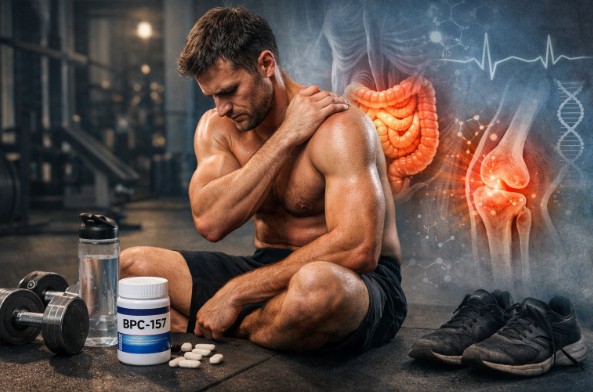
Why tissue repair matters more than most people realize
Tissue repair does not attract attention in the same way as performance. No one posts about collagen remodeling or connective tissue recovery with the same excitement they bring to a new personal record. However, it is through these slower biological recovery rates that we begin to understand how resilient the body may feel over time. An individual may look like they have recovered from a workout or two of easier days, but in reality, tendons, fascia, and irritated muscle tissue may not have recovered yet.
This is where modern fatigue is not always so simple. An individual may feel fatigued due to hard training, work, lack of sleep, mental fatigue, low-quality food, and digestive issues. Many times, it is not one issue but multiple minor issues that slow down recovery in the background. This is one reason why discussions around tissue repair have become more detailed. People want more than quick relief. They want better resilience.
When BPC-157 capsules are mentioned in this context, the appeal is easy to understand. They are often associated with support for the body’s repair environment, especially where physical stress has been repetitive or healing feels unusually slow. That does not mean the topic should be approached with blind enthusiasm. It means the subject sits in a growing category of recovery tools that attract attention because people are tired of feeling only partly restored.
BPC-157 capsules and the search for better tissue support
One of the reasons BPC-157 is so popular is that it appears to tap into something that people are already concerned about. Many active adults are not facing significant injury problems. They are dealing with small but persistent problems. A shoulder that never feels fully settled. Tightness that keeps returning. A strain that fades, then reappears when training intensity rises again. These issues create interest in anything linked to tissue repair.
The phrase BPC-157 capsules benefits is often discussed in terms of soft tissue repair because people are looking for support for areas of the body that tend to progress slowly. This is because connective tissue does not repair at the same speed as the individual’s daily energy levels. Someone can feel ready long before the tissue has adapted properly. That mismatch is part of what drives setbacks.
There are several reasons tissue-focused recovery has become a niche of its own:
- people train through low-grade discomfort more often than they admit
- many recovery routines focus on muscles while ignoring connective tissue
- everyday inflammation from stress, sleep, and nutrition can slow down the repair process
As such, it is often talked about in relation to this larger concept of recovery. This is because people are seeking assistance with regard to tissue repair, especially in relation to trying to maintain consistency with regard to training and movement. The topic is so relevant because it is the only way that an individual can continue without having to start over all the time.
Gut health is often the missing part of recovery
A lot of recovery advice still treats the body like a collection of separate systems. Muscles are one topic. Digestion is another. Energy is another. Real life works differently. Gut health can influence recovery in ways people feel every day without always naming the cause.
When digestion is off, recovery often becomes less reliable. Protein intake may look good on paper, yet the body feels flat. Energy dips happen sooner. Sleep quality changes. Bloating or irritation makes eating enough harder. A person may begin to think their training plan is wrong when the actual issue is that the body is under strain from the inside out.
This is why gut health has become part of the BPC-157 conversation. It gives the topic a wider relevance beyond sport. This is not just about getting back into the gym as quickly as possible. It is about supporting the systems which allow the body to assimilate nutrients, manage stress, and have a stronger foundation of healing.
Of course, as individuals really consider this topic, they often realize that they are brought back to the same place. The fact of the matter is, it is difficult to really heal tissue if digestion is constantly sending out signals of stress. Discomfort in the stomach is not just related to the stomach. It changes the whole recovery climate.
A few practical signs that gut health may be influencing recovery include:
- feeling heavy or inflamed after meals
- poor appetite during stressful weeks
- soreness that lasts longer than expected
- energy swings that disrupt training rhythm
In that sense, interest in BPC-157 capsules is also part of a bigger change in wellness thinking. More people understand that recovery is not built only by rest days. It is also shaped by what happens in the digestive system every single day.
Muscle recovery is about rhythm, not only speed

Muscle recovery is usually described as the time between hard effort and feeling normal again. That definition is too narrow. Real recovery is about rhythm. This is about whether or not the body is able to assimilate physical stress and get back into a normal cycle without becoming stuck in a cycle of constant tension, pain, and minor setbacks.
This is where individuals tend to get frustrated. They can still function. They can still show up. Yet the body never feels fully reset. Legs stay heavy. Joints feel irritated. Tightness returns too quickly. Motivation is hard to maintain as every workout seems to have a physical price to pay, and it seems to be lingering longer than it used to.
This is where the conversation about the benefits of BPC-157 for muscle recovery is had. It tends to attract people who are not chasing a dramatic transformation. They are trying to restore reliability. They want the body to cooperate again. They want to move through training, work, and life without feeling like every week creates a new repair problem.
That is also why muscle recovery should always be viewed as part of a larger picture. The body rebuilds best when several conditions align:
- enough sleep to support repair
- enough food to support recovery demands
- enough downtime to reduce accumulated fatigue
- enough digestive stability to use nutrients well
Once that framework is in place, people start exploring additional tools with more clarity. They are no longer looking for shortcuts. They are seeking support.
A better way to think about BPC-157 benefits
The most helpful way to think about BPC-157 capsules is with perspective. There is considerable interest in BPC-157 because of the frustrations people face with how long it takes to recover and how much strain is placed on the body. It is reasonable to be frustrated with how much strain is placed on the body in modern life and seek something more targeted than generic recovery advice.
The best way to recover is through foundations that people tend to overlook. Tissue repair needs time. Gut health needs consistency. Muscle recovery needs rhythm. A capsule becomes most meaningful when it is considered within that wider framework.
That may be the real reason this topic keeps growing. It speaks to a more mature view of recovery. Healing is no longer seen as a simple pause between workouts. It is a biological process influenced by tissue condition, digestion, load, inflammation, sleep, and the body’s capacity to adapt under pressure.
As it is considered from this larger place, the benefit of BPC-157 in relation to recovery can be considered as part of this larger conversation with regard to what it takes to really feel steady again. This is a conversation worth having, as it causes individuals to really ask more pertinent questions. Is it just my muscles that are sore, or is my body really needing more work? Is my digestion helping my recovery, or is it really hindering it? Am I looking to feel good today, or am I looking to feel better over the long haul?
Further reading
Further Reading
Article
Suboxone via Telehealth: Benefits, Costs, and What to Expect
The opioid crisis remains a serious issue in the United States, affecting millions of people and their families. Opioid use disorder (OUD) can take a devastating toll on health, relationships, and daily life. Fortunately, there are effective treatment options that can help individuals regain control over their lives. One of the most widely used treatments is Suboxone, a medication that combines buprenorphine and naloxone to reduce cravings and manage withdrawal symptoms. Trad
January 8, 2026
Article
Indian Diet Plan for Arthritis - Anti-Inflammatory Foods for Pain-Free Joints
Arthritis is a common condition that causes inflammation, stiffness, and pain in the joints. It can affect people of all ages, and diet plays a crucial role in managing its symptoms. Ayurveda emphasizes that certain foods can either aggravate or soothe inflammation. A balanced Indian diet rich in anti-inflammatory and nutrient-dense foods can help reduce pain and improve flexibility naturally. Understanding Arthritis and Ayurveda According to Ayurveda, arthritis occurs due
October 23, 2025
Article
Role of Panchakarma and Ayurveda in Healing Ulcerative Colitis Naturally
Introduction Ulcerative Colitis (UC) is a chronic inflammatory bowel disease that affects the colon and rectum, leading to symptoms like abdominal pain, diarrhea, and rectal bleeding. While modern medicine focuses on suppressing inflammation with drugs, Ayurveda takes a holistic route, targeting the root cause through detoxification, diet, and lifestyle correction. According to Ayurveda, Ulcerative Colitis is associated with Pitta dosha imbalance leading to inflammation and
October 22, 2025
Article
Faster Recovery for Athletes Using Ice Bath Therapy
In the world of sports and high-intensity training, recovery is just as critical as performance. Athletes constantly push their bodies to the limit, which often leads to microtears in muscles, inflammation, and overall fatigue. While proper nutrition, hydration, and rest are essential, innovative recovery techniques are gaining momentum. One such method, ice bath therapy, has become a go-to strategy for athletes aiming to speed up recovery and maintain peak performance. What
September 30, 2025