How Blockchain can improve the Security of Mobile App?
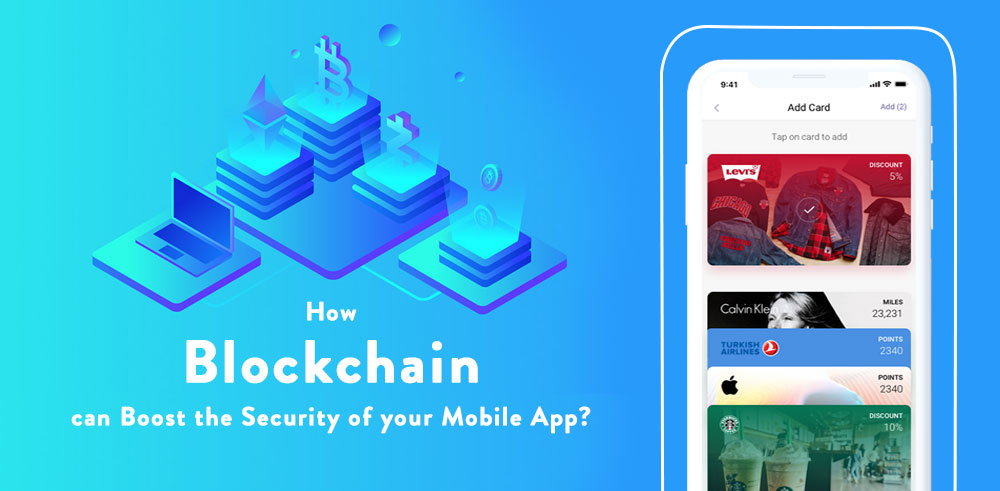 Blockchain is something that has taken the world by storm by its functionalities. It is one such technology that has the potential to better the security option. Blockchain technology can be considered as the security guard of the payment processes. Blockchain are list of blocks wherein each blocks contain cryptographic hash of the previous record and information regarding the transaction and the encrypted keys. Data can be accessed easily along with complete security. Even the slight modifications in the data will be notified to the user.
This safety feature of Blockchain is now being used by mobile app development companies to make their app more secure. Developers are integrating this technology in mobile apps because it provides an unaltered database making it more secure. Below listed are some of the blockchain features that can help developers in securing mobile apps.
Improve identification process: Blockchain technology have improved the user identification process. For verifying user identity, blockchain adopts the use of digital signatures offering all its users a private key that is encrypted for effective identity verification processes making misusing of information more difficult or even impossible. Hackings or modifications on decentralized public database platforms becomes difficult.
No need of using a password: No matter how complicated your password is, the chances of hacking or leak are still there. But in case of Blockchain technology password is not needed for authentication. This is because during a transaction the two parties make payments through SSL certificate. Blockchain network makes sure that everything is visible and accessible to eliminate the possibility of fraud.
Protecting infrastructure: Blockchain technology allows mobile app development owners to move the core target of infrastructure to a more secure area of the decentralized platform. It allows the app owners to store DNS entries on blockchain where they will have a distributed and transparent DNS and will have complete control over their domain records. This ensures that the data cannot be modified without the party’s permission and cannot be changed even by the government.
Data transparency: Blockchain enables users to share their data on the decentralized system which can be accessed by everyone on the network in real-time. But it is not possible for anyone to alter the original data without one’s permission. Blockchain provides data transparency and security by avoiding the need for third party.
Below listed are few factors to consider before choosing Blockchain for your app:
Testing and debugging: Developing, testing and debugging on a distributed network is a tuff task and expensive when compared to a non-distributed network. So developers should be ready to resolve these while working on distributed platform like blockchain.
Legality: When handling transactions legal framework is necessary. In case of blockchain, validating data is challenging and blockchain does not have the same level of legal framework. Hence developers have to make proper research on Blockchain’s legal structure for developing an app with solid legal framework.
Blockchain platforms: Developer who wants to include Blockchain in apps should have complete knowledge on its various platforms. There are many platforms available for Blockchain like OpenChain, HydraChain, Eris, MultiChain and many more. Developers can check these platforms and decide which suits best for their app.
Blockchain in the field of mobile app development will explore new possibilities and features. If you are thinking of hiring a company that can wisely make use of Blockchain technology in developing the mobile app, then visit FuGenX Technologies. FuGenX is one of the best Blockchain apps development companies Bangalore, India with highly experienced team of developers and delivers the best services on various Blockchain Platforms.
Blockchain is something that has taken the world by storm by its functionalities. It is one such technology that has the potential to better the security option. Blockchain technology can be considered as the security guard of the payment processes. Blockchain are list of blocks wherein each blocks contain cryptographic hash of the previous record and information regarding the transaction and the encrypted keys. Data can be accessed easily along with complete security. Even the slight modifications in the data will be notified to the user.
This safety feature of Blockchain is now being used by mobile app development companies to make their app more secure. Developers are integrating this technology in mobile apps because it provides an unaltered database making it more secure. Below listed are some of the blockchain features that can help developers in securing mobile apps.
Improve identification process: Blockchain technology have improved the user identification process. For verifying user identity, blockchain adopts the use of digital signatures offering all its users a private key that is encrypted for effective identity verification processes making misusing of information more difficult or even impossible. Hackings or modifications on decentralized public database platforms becomes difficult.
No need of using a password: No matter how complicated your password is, the chances of hacking or leak are still there. But in case of Blockchain technology password is not needed for authentication. This is because during a transaction the two parties make payments through SSL certificate. Blockchain network makes sure that everything is visible and accessible to eliminate the possibility of fraud.
Protecting infrastructure: Blockchain technology allows mobile app development owners to move the core target of infrastructure to a more secure area of the decentralized platform. It allows the app owners to store DNS entries on blockchain where they will have a distributed and transparent DNS and will have complete control over their domain records. This ensures that the data cannot be modified without the party’s permission and cannot be changed even by the government.
Data transparency: Blockchain enables users to share their data on the decentralized system which can be accessed by everyone on the network in real-time. But it is not possible for anyone to alter the original data without one’s permission. Blockchain provides data transparency and security by avoiding the need for third party.
Below listed are few factors to consider before choosing Blockchain for your app:
Testing and debugging: Developing, testing and debugging on a distributed network is a tuff task and expensive when compared to a non-distributed network. So developers should be ready to resolve these while working on distributed platform like blockchain.
Legality: When handling transactions legal framework is necessary. In case of blockchain, validating data is challenging and blockchain does not have the same level of legal framework. Hence developers have to make proper research on Blockchain’s legal structure for developing an app with solid legal framework.
Blockchain platforms: Developer who wants to include Blockchain in apps should have complete knowledge on its various platforms. There are many platforms available for Blockchain like OpenChain, HydraChain, Eris, MultiChain and many more. Developers can check these platforms and decide which suits best for their app.
Blockchain in the field of mobile app development will explore new possibilities and features. If you are thinking of hiring a company that can wisely make use of Blockchain technology in developing the mobile app, then visit FuGenX Technologies. FuGenX is one of the best Blockchain apps development companies Bangalore, India with highly experienced team of developers and delivers the best services on various Blockchain Platforms.Further reading
Further Reading
Article
What to Consider When Adopting Multi-Tenancy in Kubernetes?
Organizations are starting to scale their cloud native operations. And as they do, the inefficiency of managing dozens of isolated clusters has become an evident problem. As the clusters continue to sprawl, businesses must unite diverse workloads onto shared infrastructure. This is because companies need better resource utilization and centralized governance among other things. But it is imperative to remember that going from a single tenant to a multi-tenant environment need
March 12, 2026
Article
Product Engineering Services: Driving Faster Development for Startups
It has been for everyone to see the short product lifecycles and a pressing need for rapid technical scalability that have come to define the modern startup ecosystem. For early-stage companies, the challenge is no longer just conceptualizing a solution. But they must also carry it out with enough precision to withstand high market volatility and fierce competition. We know that internal teams concentrate on core business strategy and fundraising. That still leaves us with th
March 12, 2026
Article
Why Modern Facilities Rely on Environmental Monitoring and Remote Temperature Probes for Compliance and Control
In today’s regulated and data-driven environments, organizations are under constant pressure to ensure that temperature and environmental conditions remain within defined limits. Even small fluctuations can result in product loss, compliance violations, or operational downtime. As a result, many facilities are moving away from manual checks and standalone sensors and adopting comprehensive environmental monitoring solutions instead. An environmental monitor provides rea
March 5, 2026
Article
Role of Data Warehousing in Ensuring Data Quality and Consistency
Organizations have come to rely heavily on large amounts of data in today's competitive markets. But to what end? For starters, to inform strategic decisions and power machine learning models. It goes without saying that the value of these digital assets is completely dependent on the accuracy of the underlying data. So, when data is fragmented or inconsistent across departments, you will obviously have inaccurate reporting and operational inefficiencies at your hands. This c
March 2, 2026