HOW TO IDENTIFY AND DEAL WITH TOXIC PARENTS
 Toxic relationships include relationships with toxic parents. Typically, they do not treat their children with respect as individuals. They won’t compromise, take responsibility for their behavior, or apologize. Often these parents have a mental disorder or have a serious addiction. We all live with the consequences of poor parenting. However, if our childhoods were traumatic, we carry wounds from abusive or dysfunctional parenting. When they haven’t healed, toxic parents can re-injure us in ways that make growth and recovery difficult. When we grow up with dysfunctional parenting, we may not recognize it as such. It feels familiar and normal. We may be in denial and not realize that we’ve been abused emotionally, particularly if our material needs were met.
Toxic Behavior
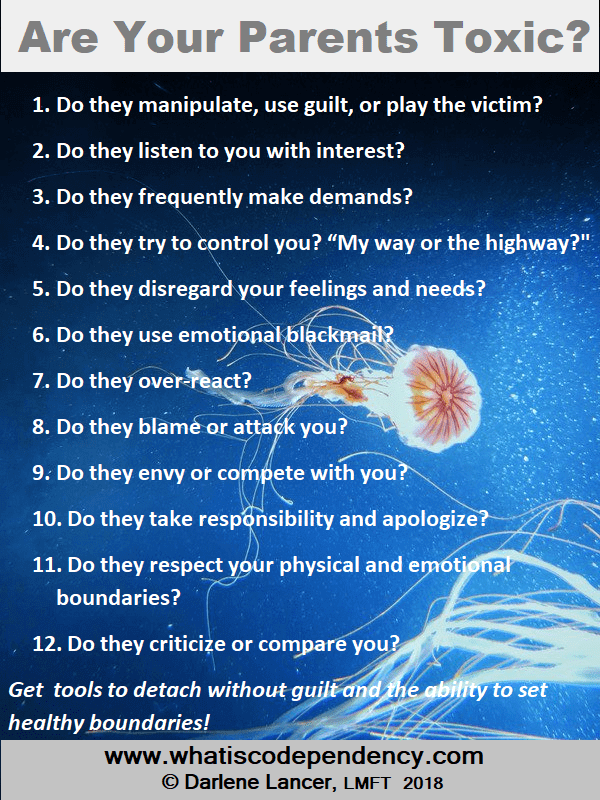
Here are some questions to ask yourself about your parents’ behavior. If this conduct is chronic and persistent, it can be toxic to your self-esteem.
Toxic relationships include relationships with toxic parents. Typically, they do not treat their children with respect as individuals. They won’t compromise, take responsibility for their behavior, or apologize. Often these parents have a mental disorder or have a serious addiction. We all live with the consequences of poor parenting. However, if our childhoods were traumatic, we carry wounds from abusive or dysfunctional parenting. When they haven’t healed, toxic parents can re-injure us in ways that make growth and recovery difficult. When we grow up with dysfunctional parenting, we may not recognize it as such. It feels familiar and normal. We may be in denial and not realize that we’ve been abused emotionally, particularly if our material needs were met.
Toxic Behavior
Here are some questions to ask yourself about your parents’ behavior. If this conduct is chronic and persistent, it can be toxic to your self-esteem.
- Do they over-react, create a scene?
- Do they use emotional blackmail?
- Do they make frequent or unreasonable demands?
- Do they try to control you? “My way or the highway.”
- Do they criticize or compare you?
- Do they listen to you with interest?
- Do they manipulate, use guilt or play the victim?
- Do they blame or attack you?
- Do they take responsibility and apologize?
- Do they respect your physical and emotional boundaries?
- Do they disregard your feelings and needs?
- Do they envy or compete with you?
- Your parents don’t have to heal for you to get well.
- Cut-offs don’t heal you. You still need to recover your power and self-esteem.
- You are not your parents.
- You're not the abusive things they say about you either. See "Codependency is Based on Fake Facts.")
- You don’t have to like your parents, but you might still be attached and love them.
- Active addiction or abuse by a parent may trigger you. Set boundaries and practice nonattachment. Get “14 Tips for Letting Go.”
- You can’t change or rescue family members.
- Indifference, not hatred or anger, is the opposite of love.
- Hating someone interferes with loving yourself.
- Unresolved anger and resentment hurt you.
Article author
About the Author
Darlene Lancer is a Licensed Marriage and Family Therapist, author of Codependency for Dummies, and Conquering Shame and Codependency: 8 Steps to Freeing the True You. She's an expert in relationships, codependency, and addiction, having worked with individuals and couples for 27 years. She maintains private practice in Santa Monica, CA and coaches internationally. For more information, see http://www.whatiscodependency.com to receive a FREE Report, "14 Tips for Letting Go," and find links to her books and ebooks, including: "Dealing with a Narcissist," "How to Speak Your Mind - Become Assertive and Set Limits,""I´m Not Perfect-I´m Only Human"- How to Beat Perfectionism and "10 Steps to Self-Esteem: The Ultimate Guide to Stop Self-Criticism." Watch her Youtube, "Codependency: What It Is and What It Feels Like."
You can follow her on Facebook at http://www.facebook.com/codependencyrecovery
Further reading
Further Reading
Article
Live A Happy Married Life by Resolving Conflicts in Marriage
Param Pujya Dadashri and Hirabaâs married life was full of peace, mutual respect and humility. Their worldly conduct and interactions were idyllic, so much so that family and friends noticed their unity and love for each other. For instance, Hiraba would visit the local vegetable market daily, she would ask Param Pujya Dadashri, âWhat vegetables should I buy?â Thus, performing her duty of asking and He would reply, âBuy whatever you would like, therefore fulfilling Hi
April 3, 2025
Article
A Look at Avoidant Attachment Styles and How They Work
The early development of avoidant attachment creates a coping mechanism that forms in childhood. Disconnected parent-child interactions typically trigger this condition. People who develop this attachment style learn to depend on their resources. They avoid deep emotional connections. People with this attachment style want intimacy, yet they remain afraid of becoming dependent on others. Understanding Avoidant Attachment Among the four primary attachment styles, avoidant atta
February 6, 2025
Article
Do You Really Understand The Swinger Life-Style?
So, you want to Play swinging? Do you like the idea of having sex with several attractive people, with no strings attached? Want the chance to explore your fantasies with like-minded people? Love having the intimacy and long-term commitment of your partner, but don't want to miss out on the opportunity for sexual exploration and variety? If this sounds like something you'd like to try, the increasingly popular lifestyle known as 'swinging' could be for you. What's so shocking
August 29, 2024
Article
Best Swinger Websites for Couples Looking for Local Swingers
Even if you don't have a swing club near you, the online swinger dating website is a good choice for you. In recent years, online dating sites have become increasingly popular, and swinging has become one of the most popular lifestyles for married couples and bisexual people. If you are looking for a swinger couple, here are some swinger dating websites where you can enjoy an adult swing. Adult Friend FinderrnAFF is the worldâs largest sex community and swinger dating site.
August 29, 2024