Overcoming manufacturing challenges with process automation
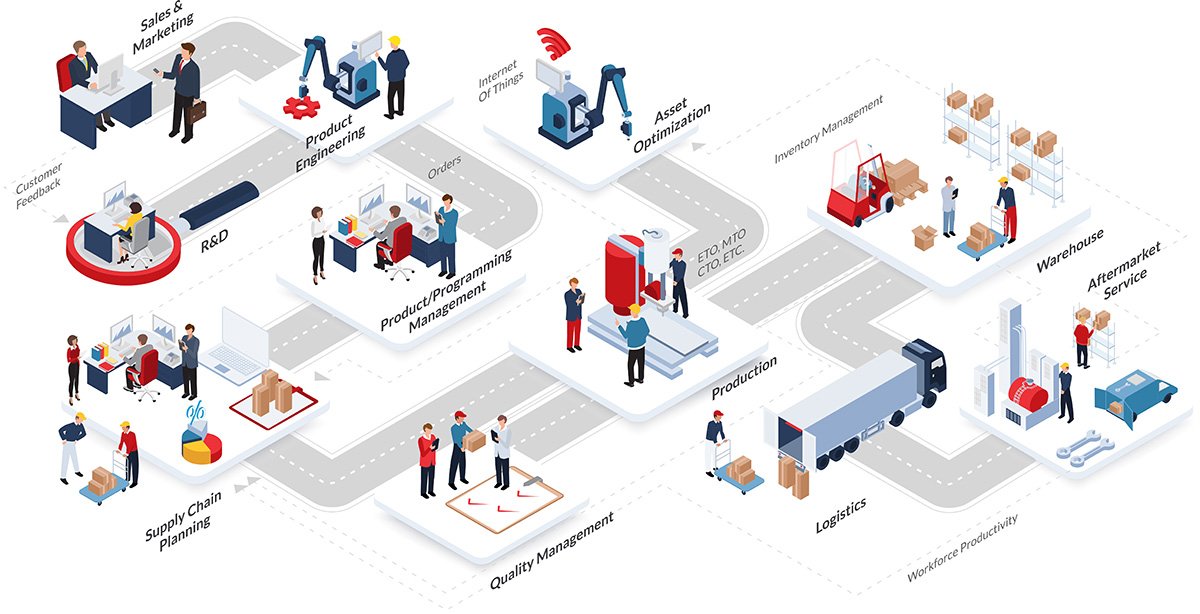
Did you know that according to the industry survey, process automation reduces manufacturing costs by 40%?
In today's globalised and digitised world, industries have started to rewire their manufacturing and operations with modern automated methods. In addition, process automation is the current trend and future need in manufacturing-based industries. This is due to its promising efficiency over resources and improved productivity, ensuring quality control.
Organisations are moving forward rigorously to find a way to produce an increasingly higher product and quality output using automation processes. Further, according to a survey conducted by impact businesses, 43% of the manufacturing-based industries have begun to use process automation services in their daily operations and are ready to deploy the RPA initiatives. Moreover, every other day there is a new automation invention in the industry so that organisations can lower their downtime and increase quality standards.
What is process automation?
Under the manufacturing industry umbrella, process automation uses technology to automate repeated and manual tasks performed by labour or human beings. According to the statistics laid down by McKinsey, the manufacturing industry has been highly impacted by the use of process automation, as more tha 64% of the global manufacturing activities around an organisation are considered to be automatable.
Automation includes varied types of softwares catering to the specific needs of different sorts of manufacturing industries. Moreover, it incorporates many machinery and AI learnings to assemble other raw materials flowing through operations to get the final manufactured product.
To summarise, process automation is a method that helps organisations to use technology that will conduct specific tasks and, at the same time, eliminate the requirement for human input.
Manufacturing challenges during process automation
While most businesses in the global sector thrive using the automated process, manufacturing-based industries still need help with issues. These issues stem from vast areas of skilled labour and information technology that must be resolved. Moreover, according to the MHI annual industry report in 2022, the top two manufacturing challenges are meeting customer expectations and solving the issues of a severe skill shortage while introducing process automation.
The significant challenges faced by manufacturing-based industries during process automation are as follows:
-
Access to appropriately skilled labours
To reduce business expenditure, organisations have started to rapidly minimise the employee count by implementing process automation and AI-based systems. But at times, these organisations need to remember that there is still a need for skilled employees or labourers to fulfil these manufactured outputs and manage automation processes parallel. Workers need an appropriate amount of expertise to know how to use automated machinery.
The business sector needs help hiring appropriately skilled labour to run its manufacturing units. In addition to the struggle, there is also a generation gap as most skilled individuals are retiring, leaving a gap in skills and experience. According to the Deloitte report, in 2023, 22% of manufacturing workers will potentially retire in the next ten years, leaving more than two million vacant positions in the industry unfulfilled by 2030.
-
Worker Security
Automation tools can pose a hazard to individuals working behind closed doors at a workplace. While robots make the workplace safer, only machines might pose a threat to human health as well. Most process automation features that are less cheap and readily available to manufacturers need a built-in safety protocol feature.
Most of the time, the manufacturers do not identify an automation process's risks. Moreover, manufacturers sometimes purchase automation machines without a proper test run which causes hazardous situations.
-
Integration Complications
Automation challenges majorly include complications with integration and in-retu scalability. As many automation processes require additional digital or physical infrastructural mechanisms, integrating them into the current workflow becomes difficult. Manufacturers, at times, also need to remember to consider the infrastructure and setup needs of an automation tool and thus create an integration issue. Also read about Document Management in Sharepoint
Organisations face a huge manufacturing problem while upscaling, and they need to understand that reorganisation can disrupt the workflow of the existing system and smooth integration is a part of the process. This disrupted integration creates a manufacturing issue, leading the unit to lose.
-
Cybersecurity
As more manufacturers use automation processes and machine learning, a cyber-attack can cause a considerable manufacturing problem. It can lead a company to a huge loss. Take the example of the recent cyber-attack on Norsk hydro in 2019; the cyberattack and invasion caused the company a total loss of 52 Million Dollars, leading to a massive loss of income.
Cyber security is a bigger problem for small businesses as they may need more resources to be prepared for the disaster. Moreover, hackers continuously look for a weak link to earn their profits, whether a big or a small manufacturing unit.
-
Delayed Manufacturing Implementations
According to research by Gartner, nearly 49% of manufacturers have delayed recent manufacturing implementations due to pandemics. Manufacturing with automation processes involves the use of technology. Several specialised tasks need attention to detail in manufacturing with accurate monitoring, which is where technology-based manufacturing has become evident. But due to recent climatic disturbances, these efforts have been halted, such as COVID-19.
As many companies outsource their manufacturing from different units and the IT units of those manufacturing were closed, delayed manufacturing became one of the biggest reasons standing in the way of efficient automation processes.
How to overcome these challenges?
-
Identification of gaps in security
While curtailing the issue of cybersecurity, implementing an effective cybersecurity strategy would help the organisation have a backup plan. A security gap analysis is also recommended to the company to help identify vulnerabilities within the system. Gap analysis involves security control checkups with regular policy formations that comply with industry standards.
Moreover, one can build robust cybersecurity strategies to overcome potential threats after identifying necessary gaps. Hazards can also be tackled by creating a next-generation firewall with an additional layer of security.
-
Innovative Hiring Practices
While curtailing the issue of skilled labour shortages, getting creative with recruitment tactics is the best way to overcome it. Companies can look for different online platforms or softwares that are made for hiring appropriately skilled labourers. Moreover, flexibility should also be a part of the process as the idea is to diversify the recruitment cycle to have less shortage.
Companies can also invest in a learning management solution through which the workers can be trained in required in-demand skills. These employees can fill the shortage as the workplace continues to skill up.
-
Use Cloud-Based Automation Tools
Curtailing the issue of integration, an organisation can invest in a Cloud-based automation tool or software. This software can help the organisation with the implementation and integration of software in a smooth way. These tools are easiest to scale as they require minimal infrastructure. Moreover, these tools are becoming more and more accessible to the current industries as it helps manufacturers to set up different technologies. Learn more SharePoint Consulting
Conclusion
Manufacturing challenges are manageable only if the manufacturers or industry leaders of the current league are ready to undertake the nuances of technology. As the technology of automation grows, so do its positive and negative sides. One has to consider the above solutions and potential challenges while dealing with process automation.
Article author
About the Author
admin
Further reading
Further Reading
Article
Why Choosing the Right Abonnement IPTV Matters for Modern Entertainment
In todayâs digital world, the way we watch television has completely changed. Traditional cable TV is slowly being replaced by smarter, more flexible streaming options. One of the most popular alternatives is IPTV. But what exactly is IPTV? And why is choosing the right abonnement IPTV so important? Letâs break it down in simple terms. What Is IPTV? IPTV stands for Internet Protocol Television. Instead of receiving TV channels through cable or satellite, IPTV delivers con
February 16, 2026
Article
The Future of Mobility: Are Electric Wheelchairs the Best Choice for You?
In today’s rapidly evolving world, the need for mobility solutions that cater to diverse lifestyles is more paramount than ever. Among these solutions, electric wheelchairs have gained significant attention, emerging as a vital tool for enhancing independence and mobility. At Etech Mobility, we understand that choosing the right mobility aid is a deeply personal decision, and we aim to provide comprehensive insights to help you make an informed choice. This article delv
February 7, 2025
Article
Social Media Monitoring: Definition, Importance, and Benefits for Your Business
What is social media monitoring? Social media monitoring is where information from social media networks such as Facebook, X (formerly Twitter), Instagram, and LinkedIn is gathered, compiled, analyzed, and interpreted. Hence, it plays an important role for brands of any type and size helping to gain an understanding of the target audience, competitors, and the general market. The difference between social media monitoring and social listening While social media monitoring and
August 29, 2024
Article
Keerthy Suresh: A Versatile Talent in Indian Cinema
Keerthy Suresh is a name that has become synonymous with versatility, grace, and immense talent in the Indian film industry. Born on October 17, 1992, in Chennai, Tamil Nadu, she has carved a niche for herself in a relatively short span of time. Known for her captivating screen presence and ability to embody a wide range of characters, Keerthy has won the hearts of audiences across the country. This article delves into the journey of Keerthy Suresh, exploring her early life,
July 3, 2024