Recovery from Rejection and Break-Ups
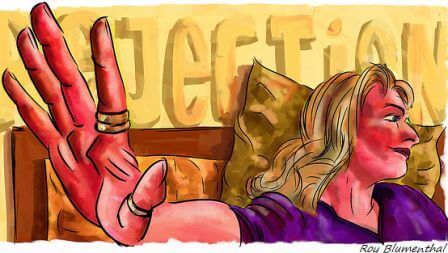 Because our nervous system is wired to need others, rejection is painful. Romantic rejection especially hurts. Feeling lonely and missing connection share the evolutionary purpose of survival and reproduction. Ideally, loneliness should encourage you reach out to others and maintain your relationships.
A UCLA study confirms that sensitivity to emotional pain resides in the same area of the brain as physical pain – they can hurt equally. Our reaction to pain is influenced by genetics. If we have increased sensitivity to physical pain, we're more vulnerable to feelings of rejection. Moreover, love stimulates such strong feel-good neuro-chemicals that rejection can feel like withdrawal from a drug, says anthropologist Helen Fisher. It can compel us to engage in obsessive thinking and compulsive behavior. This proved true even for tsetse flies in lab experiments. (See "Obsessions and Love Addiction.")
Most people start to feel better 11 weeks following rejection and report a sense of personal growth; similarly after divorce, partners start to feel better after months, not years. However, up to 15 percent of people suffer longer than three months. (“It’s Over,” Psychology Today, May-June, 2015) Rejection can feed depression, especially if we’re already even mildly depressed or have suffered depression and other losses in the past. (See “Chronic Depression and Codependency.”)
Factors Affecting Resiliency
Other factors that impact how we feel in the aftermath of a break-up are:
The duration of the relationshipr
Our attachment styler
The degree of intimacy and commitmentr
Whether problems were acknowledged and discussedr
Foreseeability of the break-upr
Cultural and family disapprovalr
Other current or past lossesr
Self-Worthr
If we have an anxious attachment style, we’re prone to obsess, and have negative feelings, and attempt to restore the relationship. If we have a secure, healthy attachment style (unusual for codependents), we’re more resilient and able to self-soothe. (See “How to Change Your Attachment Style.”)
If the relationship lacked true intimacy, pseudo-intimacy may have substituted for a real, binding connection. In some relationships, intimacy is tenuous, because one or both partners is emotionally unavailable. For example, a partner of a narcissist frequently feels unimportant or unloved, yet strives to win love and approval to validate that he or she is. (See Dealing with a Narcissist.) Lack of intimacy can be a warning sign that the relationship is troubled. Read 20 “Signs of Relationships Problems.”
The Effect of Shame and Low Self-Esteem
Rejection can devastate us if our self-worth is low. Our self-esteem affects how personally we interpret our partner’s behavior and how dependent we are upon the relationship for our sense of self and self-esteem. Codependents are more prone to being reactive to signs of disfavor by their partner, and tend to take their words and actions as a comment on themselves and their value. Additionally, many codependents give up personal interests, aspirations, and friends once they’re romantically involved. They adapt to their partner and their life revolves around the relationship. Losing it can make their world crumble if they’re left without hobbies, goals, and a support system. Often the lack self-definition and autonomy beforehand prompted them to seek someone to fill their inner emptiness, which not only can lead to relationship problems, but it resurfaces once they’re alone. (See “Why Break-ups a Hard for Codependents.”)
Internalized shame causes us to blame ourselves and/or blame our partner. (See “What is Toxic Shame.”) It can foster feelings of failure and unlovability that are hard to shake. We might feel guilty and responsible not only for our own shortcomings and actions, but also the feelings and actions of our partner; i.e., blaming ourselves for our partner’s affair. Toxic shame usually starts in childhood.
Break-ups can also trigger grief that more appropriately pertains to early parental abandonment. Many people enter relationships looking for unconditional love, hoping to salve unmet needs and wounds from childhood. We can get caught in a negative “Cycle of Abandonment” that breeds shame, fear, and abandoning relationships. If we feel unworthy and expect rejection, we’re even liable to provoke it. Healing our past allows us to live in present time and respond appropriately to others. (Read how shame can kill relationships and how to heal in Conquering Shame and Codependency: 8 Steps to Freeing the True You.)
Healing Tips
For optimal results, start making changes in your relationship with yourself and with others; first, with your ex. Experts agree that although it’s difficult and may be more painful in the short-run, no contact with your former partner will help you recover sooner. Avoid calling, texting, asking others about or checking up on your ex in social media. Doing so might give momentary relief, but reinforces obsessive-compulsive behavior and ties to the relationship. (If you’re engaged in divorce proceedings, necessary messages can be written or conveyed through atto
eys. They should not be delivered by your children.)
Read about “Growing Through Divorce” and “After Divorce - Letting Go and Moving On.” Here are more suggestions:
Meditate with healing recordings, such as exercises for self-love, self-soothing, and confidence in my YouTube.
Practice the “14 Tips for Letting Go,” available free on my website.
Prolonged feelings of guilt can limit your enjoyment of life and your ability to find love again. Forgive yourself for mistakes you made in the relationship with the e-workbook Freedom from Guilt and Blame – Finding Self-Forgiveness.
Write about the benefits of the ending of the relationship. Research has proven this technique to be effective.
Challenge false beliefs and assumptions, such as “I’m a failure (loser),” “I’ll never meet anyone else,” or “I’m damaged goods (or unlovable).” For a 10-step plan to overcome negative self-talk, read 10 Steps to Self-Esteem.
Set boundaries with your ex. This is especially important if you will continue to co-parent. Establish rules for co-parenting. If you tend toward accommodation, defensiveness, or aggression, learn to be assertive and how to set boundaries with the techniques provided in How To Speak Your Mind - Become Assertive and Set Limits.
If you think you may be codependent or have trouble letting go, attend a few Codependents Anonymous meetings, where you can get information and support for free. Visit www.coda.org. There are also online forums and chats, as well as telephone meetings nationwide, but in-person meetings are preferable. Do the exercises in Codependency for Dummies.
Although mou
ing is normal, continued depression is unhealthy for the health of your body and brain. If depression is hindering your work or daily activities, get a medical evaluation for a course of anti-depressants lasting at least six months.
You will recover, but your actions play a considerable role in how long it takes, as well as whether you grow and better yourself from your experience. For a free PDF with 15 additional strategies to deal with rejection and break-ups, email me at info@darlenelancer.com.
©Darlene Lancer 2015
Because our nervous system is wired to need others, rejection is painful. Romantic rejection especially hurts. Feeling lonely and missing connection share the evolutionary purpose of survival and reproduction. Ideally, loneliness should encourage you reach out to others and maintain your relationships.
A UCLA study confirms that sensitivity to emotional pain resides in the same area of the brain as physical pain – they can hurt equally. Our reaction to pain is influenced by genetics. If we have increased sensitivity to physical pain, we're more vulnerable to feelings of rejection. Moreover, love stimulates such strong feel-good neuro-chemicals that rejection can feel like withdrawal from a drug, says anthropologist Helen Fisher. It can compel us to engage in obsessive thinking and compulsive behavior. This proved true even for tsetse flies in lab experiments. (See "Obsessions and Love Addiction.")
Most people start to feel better 11 weeks following rejection and report a sense of personal growth; similarly after divorce, partners start to feel better after months, not years. However, up to 15 percent of people suffer longer than three months. (“It’s Over,” Psychology Today, May-June, 2015) Rejection can feed depression, especially if we’re already even mildly depressed or have suffered depression and other losses in the past. (See “Chronic Depression and Codependency.”)
Factors Affecting Resiliency
Other factors that impact how we feel in the aftermath of a break-up are:
The duration of the relationshipr
Our attachment styler
The degree of intimacy and commitmentr
Whether problems were acknowledged and discussedr
Foreseeability of the break-upr
Cultural and family disapprovalr
Other current or past lossesr
Self-Worthr
If we have an anxious attachment style, we’re prone to obsess, and have negative feelings, and attempt to restore the relationship. If we have a secure, healthy attachment style (unusual for codependents), we’re more resilient and able to self-soothe. (See “How to Change Your Attachment Style.”)
If the relationship lacked true intimacy, pseudo-intimacy may have substituted for a real, binding connection. In some relationships, intimacy is tenuous, because one or both partners is emotionally unavailable. For example, a partner of a narcissist frequently feels unimportant or unloved, yet strives to win love and approval to validate that he or she is. (See Dealing with a Narcissist.) Lack of intimacy can be a warning sign that the relationship is troubled. Read 20 “Signs of Relationships Problems.”
The Effect of Shame and Low Self-Esteem
Rejection can devastate us if our self-worth is low. Our self-esteem affects how personally we interpret our partner’s behavior and how dependent we are upon the relationship for our sense of self and self-esteem. Codependents are more prone to being reactive to signs of disfavor by their partner, and tend to take their words and actions as a comment on themselves and their value. Additionally, many codependents give up personal interests, aspirations, and friends once they’re romantically involved. They adapt to their partner and their life revolves around the relationship. Losing it can make their world crumble if they’re left without hobbies, goals, and a support system. Often the lack self-definition and autonomy beforehand prompted them to seek someone to fill their inner emptiness, which not only can lead to relationship problems, but it resurfaces once they’re alone. (See “Why Break-ups a Hard for Codependents.”)
Internalized shame causes us to blame ourselves and/or blame our partner. (See “What is Toxic Shame.”) It can foster feelings of failure and unlovability that are hard to shake. We might feel guilty and responsible not only for our own shortcomings and actions, but also the feelings and actions of our partner; i.e., blaming ourselves for our partner’s affair. Toxic shame usually starts in childhood.
Break-ups can also trigger grief that more appropriately pertains to early parental abandonment. Many people enter relationships looking for unconditional love, hoping to salve unmet needs and wounds from childhood. We can get caught in a negative “Cycle of Abandonment” that breeds shame, fear, and abandoning relationships. If we feel unworthy and expect rejection, we’re even liable to provoke it. Healing our past allows us to live in present time and respond appropriately to others. (Read how shame can kill relationships and how to heal in Conquering Shame and Codependency: 8 Steps to Freeing the True You.)
Healing Tips
For optimal results, start making changes in your relationship with yourself and with others; first, with your ex. Experts agree that although it’s difficult and may be more painful in the short-run, no contact with your former partner will help you recover sooner. Avoid calling, texting, asking others about or checking up on your ex in social media. Doing so might give momentary relief, but reinforces obsessive-compulsive behavior and ties to the relationship. (If you’re engaged in divorce proceedings, necessary messages can be written or conveyed through atto
eys. They should not be delivered by your children.)
Read about “Growing Through Divorce” and “After Divorce - Letting Go and Moving On.” Here are more suggestions:
Meditate with healing recordings, such as exercises for self-love, self-soothing, and confidence in my YouTube.
Practice the “14 Tips for Letting Go,” available free on my website.
Prolonged feelings of guilt can limit your enjoyment of life and your ability to find love again. Forgive yourself for mistakes you made in the relationship with the e-workbook Freedom from Guilt and Blame – Finding Self-Forgiveness.
Write about the benefits of the ending of the relationship. Research has proven this technique to be effective.
Challenge false beliefs and assumptions, such as “I’m a failure (loser),” “I’ll never meet anyone else,” or “I’m damaged goods (or unlovable).” For a 10-step plan to overcome negative self-talk, read 10 Steps to Self-Esteem.
Set boundaries with your ex. This is especially important if you will continue to co-parent. Establish rules for co-parenting. If you tend toward accommodation, defensiveness, or aggression, learn to be assertive and how to set boundaries with the techniques provided in How To Speak Your Mind - Become Assertive and Set Limits.
If you think you may be codependent or have trouble letting go, attend a few Codependents Anonymous meetings, where you can get information and support for free. Visit www.coda.org. There are also online forums and chats, as well as telephone meetings nationwide, but in-person meetings are preferable. Do the exercises in Codependency for Dummies.
Although mou
ing is normal, continued depression is unhealthy for the health of your body and brain. If depression is hindering your work or daily activities, get a medical evaluation for a course of anti-depressants lasting at least six months.
You will recover, but your actions play a considerable role in how long it takes, as well as whether you grow and better yourself from your experience. For a free PDF with 15 additional strategies to deal with rejection and break-ups, email me at info@darlenelancer.com.
©Darlene Lancer 2015Article author
About the Author
Darlene Lancer is a Licensed Marriage and Family Therapist, author of Codependency for Dummies, and Conquering Shame and Codependency: 8 Steps to Freeing the True You. She's an expert in relationships, codependency, and addiction, having worked with individuals and couples for 27 years. She maintains private practice in Santa Monica, CA and coaches internationally. For more information, see http://www.whatiscodependency.com to receive a FREE Report, "14 Tips for Letting Go," and find links to her books and ebooks, including: "Dealing with a Narcissist," "How to Speak Your Mind - Become Assertive and Set Limits" and "10 Steps to Self-Esteem: The Ultimate Guide to Stop Self-Criticism." Watch her Youtube, "Codependency: What It Is and What It Feels Like." You can follow her on Facebook at http://www.facebook.com/codependencyrecovery.
Further reading
Further Reading
Article
Live A Happy Married Life by Resolving Conflicts in Marriage
Param Pujya Dadashri and Hirabaâs married life was full of peace, mutual respect and humility. Their worldly conduct and interactions were idyllic, so much so that family and friends noticed their unity and love for each other. For instance, Hiraba would visit the local vegetable market daily, she would ask Param Pujya Dadashri, âWhat vegetables should I buy?â Thus, performing her duty of asking and He would reply, âBuy whatever you would like, therefore fulfilling Hi
April 3, 2025
Article
A Look at Avoidant Attachment Styles and How They Work
The early development of avoidant attachment creates a coping mechanism that forms in childhood. Disconnected parent-child interactions typically trigger this condition. People who develop this attachment style learn to depend on their resources. They avoid deep emotional connections. People with this attachment style want intimacy, yet they remain afraid of becoming dependent on others. Understanding Avoidant Attachment Among the four primary attachment styles, avoidant atta
February 6, 2025
Article
Do You Really Understand The Swinger Life-Style?
So, you want to Play swinging? Do you like the idea of having sex with several attractive people, with no strings attached? Want the chance to explore your fantasies with like-minded people? Love having the intimacy and long-term commitment of your partner, but don't want to miss out on the opportunity for sexual exploration and variety? If this sounds like something you'd like to try, the increasingly popular lifestyle known as 'swinging' could be for you. What's so shocking
August 29, 2024
Article
Best Swinger Websites for Couples Looking for Local Swingers
Even if you don't have a swing club near you, the online swinger dating website is a good choice for you. In recent years, online dating sites have become increasingly popular, and swinging has become one of the most popular lifestyles for married couples and bisexual people. If you are looking for a swinger couple, here are some swinger dating websites where you can enjoy an adult swing. Adult Friend FinderrnAFF is the worldâs largest sex community and swinger dating site.
August 29, 2024