Self-Forgiveness and Letting Go of Guilt
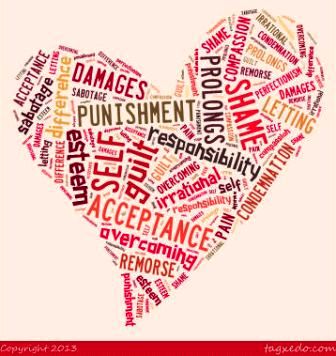 Guilt is good. Yes! Guilt actually encourages people to have more empathy for others, to take corrective action, and to improve themselves. Self-forgiveness following guilt is self-essential to esteem, which is key to enjoyment of life and relationships. Yet, for many, self-acceptance remains elusive because of unhealthy guilt - sometimes for decades or a lifetime.
Guilt may be an unrelenting source of pain. You might hold a belief that you should feel guilty and condemn yourself – not once, but over and over – or guilt may simmer in your unconscious. Either way, this kind of guilt is insidious and self-destructive and can sabotage your goals. Guilt causes anger and resentment, not only at yourself, but toward other in order to justify your actions. Anger, resentment, and guilt sap your energy, cause depression and illness, and stop you from having success, pleasure, and fulfilling relationships. It keeps you stuck in the past and prevents you from moving forward.
You may feel guilty not only for your actions, but also thoughts: For instance, wishing someone pain, misfortune, or even death; or for feelings, like anger, lust, or greed; or lack of feelings, such as not reciprocating love or friendship, or not feeling grief over the loss of someone close. Although irrational, you might feel guilty for the thoughts, attributes, feelings, and actions of someone else. It’s not unusual for people to feel guilty for leaving their faith or not meeting the expectations of their parents. People often judge themselves based upon the blame or false accusations emanating from others, which they believe to be true. For example, a woman projects her self-centeredness onto her husband and accuses him of being selfish. He believes it, not realizing it is she who is selfish (attribute). She might blame her insecurity (feeling) on him, claiming he’s flirting, uncaring, or indifferent. A man might blame his anger (feeling), or mistake (action) on his partner, and she believes him and feels guilty.
It’s common for codependents to take the blame for others’ behavior, because of their low self-esteem. A spouse might accept her husband’s blame and feel guilty for his drinking or addiction. Victims of abuse or sexual assault frequently feel guilt and shame, despite the fact that they were victims and it’s the perpetrator that is culpable. When it comes to divorce, those initiating it often feel guilty, even though responsibility for their marital problem is shared or was primarily due to their partner.
Guilt should be distinguished from shame, where you feel inferior, inadequate, or bad about who you’re verses what you did. When irrational and not absolved, guilt can lead to shame. Shame isn’t constructive. Instead of enhancing empathy and self-improvement, it has the opposite effect. It leads to greater self-preoccupation and undermines both the self and relationships.
If you already have low self-esteem or have issues around shame (most people do), it may be difficult to concentrate on what it is you feel guilty about. However, this is necessary in order to get past it. Rationalizing or brushing it under the rug to avoid self-examination may help temporarily, but not achieve self-forgiveness. Alte
atively, beating yourself up prolongs guilt and shame and damages your self-esteem; while, accepting responsibility and taking remedial action improves it. Here are suggested steps you can take. I refer to actions, but they apply equally to thoughts or feelings you feel guilty about:
1. If you’ve been rationalizing your actions, take responsibility. “Okay, I did (or said) it.”
2. Write a story about what happened, including how you felt about yourself and others involved before, during, and after.
3. Analyze what were your needs at that time, and were they being met. If not, why not?
4. What were your motives? What or who was the catalyst for your behavior?
5. Does the catalyst remind you of something from your past? Write a story about it, and include dialogue and your feelings.
6. How were your feelings and mistakes handled growing up? Were they forgiven, judged, or punished? Who was hard on you? Were you made to feel ashamed?
7. Evaluate the standards by which you’re judging yourself. Are they your values, your parents’, your friends’, your spouse’s, or those of your faith? Do you need their approval? It’s pointless to try to live up to someone else’s expectations. Others' desires and values have more to do with them. They may never approve, or you may sacrifice yourself and your happiness seeking approval.
8. Identify the values and beliefs that in fact governed you during the event? For example, “Adultery is okay if my spouse never finds out.” Be honest, and decide which values you agree with.
9. Did your actions reflect your true values? If not, trace your beliefs, thoughts, and emotions that led to your actions. Think about what may have led you to abandon your values? Notice that you hurt yourself when you violate your values. This actually causes more harm than disappointing someone else.
10. How did your actions affect you and others? Whom did you hurt? Include yourself on the list.
11. Think of ways to make amends? Take action, and make them. For example, if the person is dead, you can write a letter of apology. You can also decide to act differently in the future.
12. Looking back, what healthier beliefs, thoughts, feelings, and actions would have led to a more desirable result?
13. Do you expect perfection? Has this improved your overall well-being? Perfection is illusory and a manifestation of underlying shame.
14. Would you forgive someone else for the same actions? Why would you treat yourself differently? How does it benefit you to continue to punish yourself?
15. Remorse is healthy and leads to corrective action. Think about what you’ve learned from your experience and how you might act differently in today.
16. Write yourself an empathic letter of understanding, appreciation, and forgiveness.
17. Repeat on a daily basis words of kindness and forgiveness from your letter, such as, “I’m innocent,” “I forgive myself,” and “I love myself.”
18. Share honestly with others what you did. Don’t share with those who might judge you. If appropriate, talk about what happened in a 12-Step group. Secrecy prolongs guilt and shame.
Realize that you can forgive yourself and still believe you were at fault, just as you might forgive someone else even though you think the person was in the wrong. You can regret what you did, yet accept that you’re human and make mistakes. Perhaps, you did your best, given your circumstances, awareness, maturity, and experience at the time. This is a healthy, humble attitude.
If you continue to have difficulties with self-forgiveness, it’s helpful to see a counselor. You may be suffering from shame, which predisposes you to self-loathing, guilt, and feeling bad about yourself. This can be healed in therapy. See also my blogs on self-nurturing and self-love. Get my ebook, 10 Steps to Self Esteem to build your self-esteem.
©Darlene Lancer 2013
Guilt is good. Yes! Guilt actually encourages people to have more empathy for others, to take corrective action, and to improve themselves. Self-forgiveness following guilt is self-essential to esteem, which is key to enjoyment of life and relationships. Yet, for many, self-acceptance remains elusive because of unhealthy guilt - sometimes for decades or a lifetime.
Guilt may be an unrelenting source of pain. You might hold a belief that you should feel guilty and condemn yourself – not once, but over and over – or guilt may simmer in your unconscious. Either way, this kind of guilt is insidious and self-destructive and can sabotage your goals. Guilt causes anger and resentment, not only at yourself, but toward other in order to justify your actions. Anger, resentment, and guilt sap your energy, cause depression and illness, and stop you from having success, pleasure, and fulfilling relationships. It keeps you stuck in the past and prevents you from moving forward.
You may feel guilty not only for your actions, but also thoughts: For instance, wishing someone pain, misfortune, or even death; or for feelings, like anger, lust, or greed; or lack of feelings, such as not reciprocating love or friendship, or not feeling grief over the loss of someone close. Although irrational, you might feel guilty for the thoughts, attributes, feelings, and actions of someone else. It’s not unusual for people to feel guilty for leaving their faith or not meeting the expectations of their parents. People often judge themselves based upon the blame or false accusations emanating from others, which they believe to be true. For example, a woman projects her self-centeredness onto her husband and accuses him of being selfish. He believes it, not realizing it is she who is selfish (attribute). She might blame her insecurity (feeling) on him, claiming he’s flirting, uncaring, or indifferent. A man might blame his anger (feeling), or mistake (action) on his partner, and she believes him and feels guilty.
It’s common for codependents to take the blame for others’ behavior, because of their low self-esteem. A spouse might accept her husband’s blame and feel guilty for his drinking or addiction. Victims of abuse or sexual assault frequently feel guilt and shame, despite the fact that they were victims and it’s the perpetrator that is culpable. When it comes to divorce, those initiating it often feel guilty, even though responsibility for their marital problem is shared or was primarily due to their partner.
Guilt should be distinguished from shame, where you feel inferior, inadequate, or bad about who you’re verses what you did. When irrational and not absolved, guilt can lead to shame. Shame isn’t constructive. Instead of enhancing empathy and self-improvement, it has the opposite effect. It leads to greater self-preoccupation and undermines both the self and relationships.
If you already have low self-esteem or have issues around shame (most people do), it may be difficult to concentrate on what it is you feel guilty about. However, this is necessary in order to get past it. Rationalizing or brushing it under the rug to avoid self-examination may help temporarily, but not achieve self-forgiveness. Alte
atively, beating yourself up prolongs guilt and shame and damages your self-esteem; while, accepting responsibility and taking remedial action improves it. Here are suggested steps you can take. I refer to actions, but they apply equally to thoughts or feelings you feel guilty about:
1. If you’ve been rationalizing your actions, take responsibility. “Okay, I did (or said) it.”
2. Write a story about what happened, including how you felt about yourself and others involved before, during, and after.
3. Analyze what were your needs at that time, and were they being met. If not, why not?
4. What were your motives? What or who was the catalyst for your behavior?
5. Does the catalyst remind you of something from your past? Write a story about it, and include dialogue and your feelings.
6. How were your feelings and mistakes handled growing up? Were they forgiven, judged, or punished? Who was hard on you? Were you made to feel ashamed?
7. Evaluate the standards by which you’re judging yourself. Are they your values, your parents’, your friends’, your spouse’s, or those of your faith? Do you need their approval? It’s pointless to try to live up to someone else’s expectations. Others' desires and values have more to do with them. They may never approve, or you may sacrifice yourself and your happiness seeking approval.
8. Identify the values and beliefs that in fact governed you during the event? For example, “Adultery is okay if my spouse never finds out.” Be honest, and decide which values you agree with.
9. Did your actions reflect your true values? If not, trace your beliefs, thoughts, and emotions that led to your actions. Think about what may have led you to abandon your values? Notice that you hurt yourself when you violate your values. This actually causes more harm than disappointing someone else.
10. How did your actions affect you and others? Whom did you hurt? Include yourself on the list.
11. Think of ways to make amends? Take action, and make them. For example, if the person is dead, you can write a letter of apology. You can also decide to act differently in the future.
12. Looking back, what healthier beliefs, thoughts, feelings, and actions would have led to a more desirable result?
13. Do you expect perfection? Has this improved your overall well-being? Perfection is illusory and a manifestation of underlying shame.
14. Would you forgive someone else for the same actions? Why would you treat yourself differently? How does it benefit you to continue to punish yourself?
15. Remorse is healthy and leads to corrective action. Think about what you’ve learned from your experience and how you might act differently in today.
16. Write yourself an empathic letter of understanding, appreciation, and forgiveness.
17. Repeat on a daily basis words of kindness and forgiveness from your letter, such as, “I’m innocent,” “I forgive myself,” and “I love myself.”
18. Share honestly with others what you did. Don’t share with those who might judge you. If appropriate, talk about what happened in a 12-Step group. Secrecy prolongs guilt and shame.
Realize that you can forgive yourself and still believe you were at fault, just as you might forgive someone else even though you think the person was in the wrong. You can regret what you did, yet accept that you’re human and make mistakes. Perhaps, you did your best, given your circumstances, awareness, maturity, and experience at the time. This is a healthy, humble attitude.
If you continue to have difficulties with self-forgiveness, it’s helpful to see a counselor. You may be suffering from shame, which predisposes you to self-loathing, guilt, and feeling bad about yourself. This can be healed in therapy. See also my blogs on self-nurturing and self-love. Get my ebook, 10 Steps to Self Esteem to build your self-esteem.
©Darlene Lancer 2013Article author
About the Author
Darlene Lancer is a Licensed Marriage and Family Therapist, author of Codependency for Dummies, and expert in relationships, codependency, and addiction. She has a broad range of experience, working with individuals and couples for 25 years. She is an author and frequent speaker. She maintains private practice in Santa Monica, CA and coaches internationally. For more information, see http://www.whatiscodependency.com to receive a FREE Report, "14 Tips for Letting Go," and find links to her books, Codependency for Dummies and ebooks, How to Speak Your Mind- Become Assertive and Set Limits and 10 Steps to Self-Esteem: The Ultimate Guide to Stop Self-Criticism.
You can follow her on Facebook at http://www.facebook.com/codependencyrecovery.
Further reading
Further Reading
Article
Live A Happy Married Life by Resolving Conflicts in Marriage
Param Pujya Dadashri and Hirabaâs married life was full of peace, mutual respect and humility. Their worldly conduct and interactions were idyllic, so much so that family and friends noticed their unity and love for each other. For instance, Hiraba would visit the local vegetable market daily, she would ask Param Pujya Dadashri, âWhat vegetables should I buy?â Thus, performing her duty of asking and He would reply, âBuy whatever you would like, therefore fulfilling Hi
April 3, 2025
Article
A Look at Avoidant Attachment Styles and How They Work
The early development of avoidant attachment creates a coping mechanism that forms in childhood. Disconnected parent-child interactions typically trigger this condition. People who develop this attachment style learn to depend on their resources. They avoid deep emotional connections. People with this attachment style want intimacy, yet they remain afraid of becoming dependent on others. Understanding Avoidant Attachment Among the four primary attachment styles, avoidant atta
February 6, 2025
Article
Do You Really Understand The Swinger Life-Style?
So, you want to Play swinging? Do you like the idea of having sex with several attractive people, with no strings attached? Want the chance to explore your fantasies with like-minded people? Love having the intimacy and long-term commitment of your partner, but don't want to miss out on the opportunity for sexual exploration and variety? If this sounds like something you'd like to try, the increasingly popular lifestyle known as 'swinging' could be for you. What's so shocking
August 29, 2024
Article
Best Swinger Websites for Couples Looking for Local Swingers
Even if you don't have a swing club near you, the online swinger dating website is a good choice for you. In recent years, online dating sites have become increasingly popular, and swinging has become one of the most popular lifestyles for married couples and bisexual people. If you are looking for a swinger couple, here are some swinger dating websites where you can enjoy an adult swing. Adult Friend FinderrnAFF is the worldâs largest sex community and swinger dating site.
August 29, 2024