Siemens using traders to circumvent Iranian Sanctions
 The Opportunity
On June 24 2010, US Congress adapts Comprehensive Iran Sanctions, Accountability, and Divestment Act of 2010 with a vote of 99-0 at the senate. These regulations and sanctions were intended to target US and non-US firms active in the US, from investing and providing goods and services for Iranian energy sector.
In other words, any US or non US company active in US market or connected to the US financial network or work with US Dollar, is prohibited from proving any equipment, services or parts, valued more than $1 Million. None compliance of this act would result in possible sanctions and financial penalties.
Siemens AG, while announces that they no longer provide equipment and services for final destination of Iran, uses this opportunity to use its partners and associate companies to circumvent the Iranian sanctions to maximize its profit.
In one example, in late 2010 and 2011, Siemens AG, used HATCO (Hava Abzar Tehran) Corporation, which claims to be a partner of Siemens AG and Linde (another American company active in the oil and gas industry), as a middle man to provide three Integrally Geared Centrifugal Compressors with suctions pressure of 1 Bar and discharge 10 Bars to be installed and used at phase 19 of the South Pars Gas Field Development in Asalouyeh Seaport, north of Persian Gulf in Iran.
The Opportunity
On June 24 2010, US Congress adapts Comprehensive Iran Sanctions, Accountability, and Divestment Act of 2010 with a vote of 99-0 at the senate. These regulations and sanctions were intended to target US and non-US firms active in the US, from investing and providing goods and services for Iranian energy sector.
In other words, any US or non US company active in US market or connected to the US financial network or work with US Dollar, is prohibited from proving any equipment, services or parts, valued more than $1 Million. None compliance of this act would result in possible sanctions and financial penalties.
Siemens AG, while announces that they no longer provide equipment and services for final destination of Iran, uses this opportunity to use its partners and associate companies to circumvent the Iranian sanctions to maximize its profit.
In one example, in late 2010 and 2011, Siemens AG, used HATCO (Hava Abzar Tehran) Corporation, which claims to be a partner of Siemens AG and Linde (another American company active in the oil and gas industry), as a middle man to provide three Integrally Geared Centrifugal Compressors with suctions pressure of 1 Bar and discharge 10 Bars to be installed and used at phase 19 of the South Pars Gas Field Development in Asalouyeh Seaport, north of Persian Gulf in Iran.
 The three highly technical compressors, which were an absolute must to operate the plant, purchase by HATCO (Hava Abzar Tehran), were manufactured at the Leipzig plant of Siemens Turbomachinery Equipment GmbH. A plant purchased by Siemens AG from PGW.
The equipment and spare parts which were purchased by HATCO (Hava Abzar Tehran) from Siemens for about â¬6 Million and supplied to Petro Pars Iran ,the EPC contactor for phase 19 of the South Pars Gas Field Development and in listed of US sanctions, are Dual USE goods with military and nuclear enrichment applications.
While the exact same machines with same specifications, engineering and even tag numbers, were custom made by Siemens in 2007 and 2008 for two other South Pars phases in Iran (Phases 15/16 and Phases 17/18), and “made to order” nature of these machines, it was crystal clear to Siemens that the machines that were purchased by HATCO (Hava Abzar Tehran) was for Iranian end user.
The equipment and spare parts were handed over to HATCO (Hava Abzar Tehran) in Germany and it is unclear in what applications these machines are being used, bearing in mind the desperateness of the Iranians for technology to expand their ballistic missile and nuclear enrichment programs.
HATCO (Hava Abzar Tehran) claims that the equipment are handed over to Petro Pars Iran (PPI) on their website: www.hatco.ir
The three highly technical compressors, which were an absolute must to operate the plant, purchase by HATCO (Hava Abzar Tehran), were manufactured at the Leipzig plant of Siemens Turbomachinery Equipment GmbH. A plant purchased by Siemens AG from PGW.
The equipment and spare parts which were purchased by HATCO (Hava Abzar Tehran) from Siemens for about â¬6 Million and supplied to Petro Pars Iran ,the EPC contactor for phase 19 of the South Pars Gas Field Development and in listed of US sanctions, are Dual USE goods with military and nuclear enrichment applications.
While the exact same machines with same specifications, engineering and even tag numbers, were custom made by Siemens in 2007 and 2008 for two other South Pars phases in Iran (Phases 15/16 and Phases 17/18), and “made to order” nature of these machines, it was crystal clear to Siemens that the machines that were purchased by HATCO (Hava Abzar Tehran) was for Iranian end user.
The equipment and spare parts were handed over to HATCO (Hava Abzar Tehran) in Germany and it is unclear in what applications these machines are being used, bearing in mind the desperateness of the Iranians for technology to expand their ballistic missile and nuclear enrichment programs.
HATCO (Hava Abzar Tehran) claims that the equipment are handed over to Petro Pars Iran (PPI) on their website: www.hatco.ir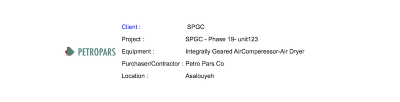 US authorities have started an investigation on this matter in 2020 but the result is yet unknown.
Further reading
Further Reading
Article
Beyond the hype: Why AI projects fail and how to succeed
Artificial intelligence continues to dominate business conversations, but enthusiasm alone does not guarantee results. While many companies rush to adopt AI in hopes of gaining a competitive edge, a large number of initiatives still fall short. The problem is rarely the technology itself. More often, failure happens because organizations approach AI without the structure, readiness, and discipline required for long-term success. AI projects do not fail because the technology
March 4, 2026
Article
AI Avatar Development: Pros, Cons & Industry Use
AI Avatar Development: Real Innovation or Just Hype? In todayâs hyperconnected world, attention is currency. To stand out, brands can no longer settle for flashy features or surface-level engagement. They need to build meaningful, scalable, and personalized experiences. Enter AI avatars: digital humans that are revolutionizing communication by bringing lifelike presence to virtual interactions. Imagine a team member who never takes a coffee break, speaks ten languages fluen
February 27, 2026
Article
Beyond the Script: How Call Centers Keep Telecom Networks Running and Customers Happy
The Quiet Engine Behind Every Connection Most people think of telecom services as towers, signals, and mobile data moving invisibly through the air. Yet behind every call that connects and every message that reaches its destination, there is another system quietly working in the background. That system is the call center. While customers often interact with telecom companies only when something goes wrong, these centers operate constantly, guiding problems toward solutions an
February 23, 2026
Article
Why Lead Generation Alone Is Failing Solar Companies Without Appointment Expertise
Introduction The solar industry once believed that collecting as many leads as possible was the fastest path to growth. Marketing teams focused on filling databases with names, phone numbers, and email addresses. At first, the numbers looked promising. Dashboards showed rising interest and more inquiries than ever before. Yet behind the scenes, many companies began to notice a quiet problem. Revenue growth did not match the flood of leads. Sales teams felt overwhelmed, conver
February 6, 2026