Symptoms of Children of Narcissists and Addicts
Reader stats
Article rating
New ratings
Reader rating appears publicly after enough eligible article ratings.
Rate this article
Sign in to rate this article.
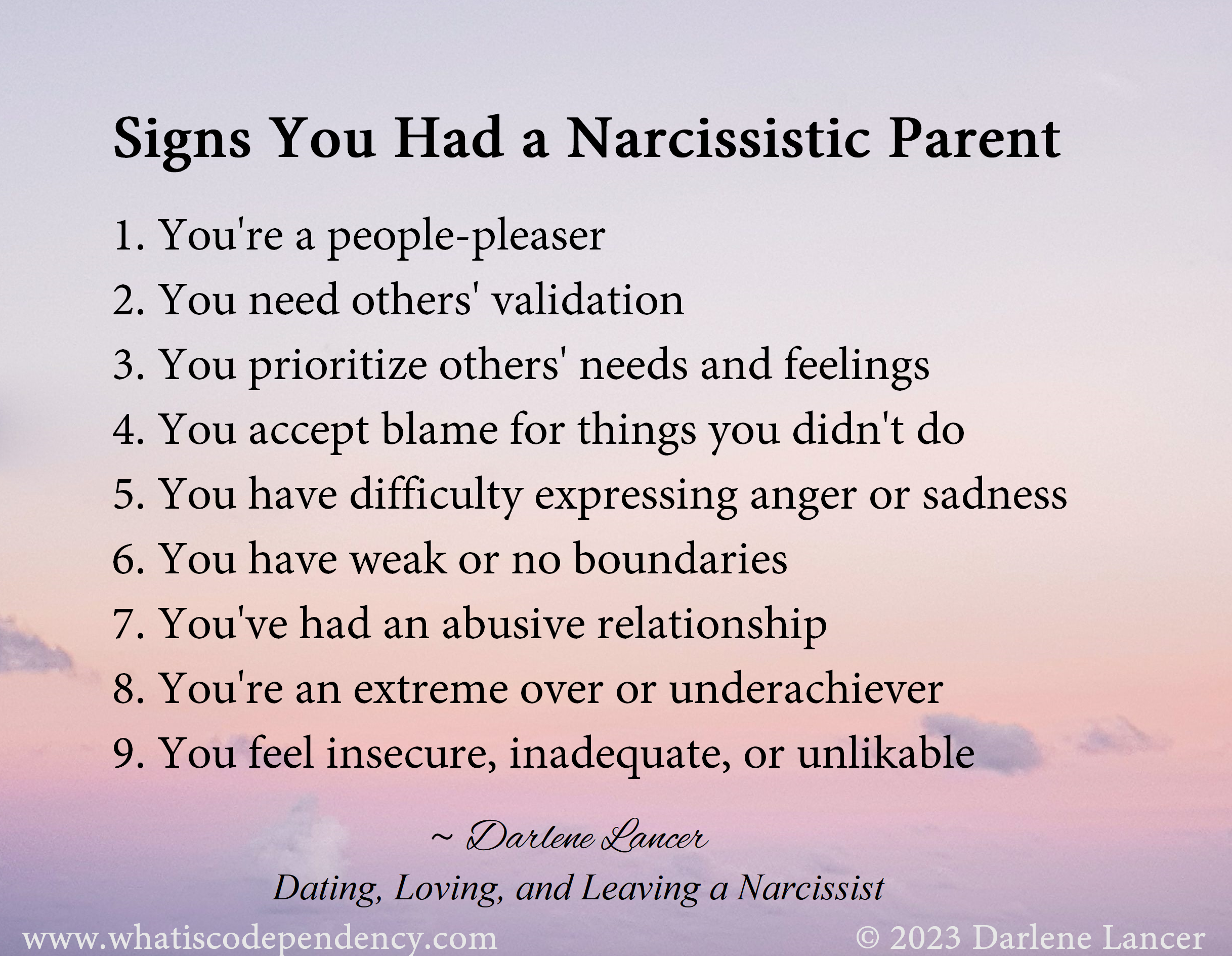
Children of narcissists and addicts (all substance abusers) grow up in a stressful, dysfunctional family environment, which in most cases leads to codependency. Due to the symptoms and defenses related to substance abuse and narcissism, particularly impaired boundaries, lack of empathy, and mood dysregulation, these parents are unable to see or value their children as independent individuals, validate and nurture them, and provide a reliably safe relationship and home environment.
Generally, narcissistic parents are ignoring, controlling, blaming, self-absorbed, and intolerant or unaware of their children’s needs and of the effects of their behavior on other people.
Children are much more vulnerable than other people to these narcissistic traits given their immaturity, impressionability, and dependency on their parents.
Similarly, addicts are preoccupied with themselves and their addiction. Although they may be able to empathize with their children during sober periods, other times they disappoint and emotionally abandon their children by responding in ways that shame or ignore their children’s needs and feelings. Both types of families are marked by interpersonal conflict between the parents and/or in sibling and parent/child relationships.
The result is that children of addicts and narcissists feel insecure and unsafe. Not knowing what a normal, healthy home environment is like, they’re unaware that they don’t feel safe and enter into similarly unsafe relationships. They tend to have mental health problems in adulthood, including unrecognized anxiety or chronic depression (dysthymia).
Due to the lack of safety and parents’ inability to empathize and attune to their children’s feelings and needs, children of narcissists and addicts become insecure and hypervigilant. Instead of the parent attuning to them, they attune to their parent. They learn to read their parents' moods, wants, and needs, and their focus becomes exte alized, ignoring their own feelings, wants, and needs. Moreover, their feelings, wants, and needs are often ignored or shamed by their parent.
As a result, in adulthood, children of narcissists and children of addicts tend to focus on and feel responsible for other people. Often, if they’re aware of their feelings, wants, and needs, they feel shame about them. They have trouble clearly identifying and assertively expressing their feelings, wants, and needs. It’s not unusual for them to feel that self-assertion is selfish. They may have been labeled selfish by their parent who was projecting their own selfishness.
In response to these parents, children usually react in one of three ways. Some children identify with the parent who becomes a role model. Also, the parent may have expected or demanded that their child adopt the same values; e.g. rise to the top, be vindictive, or take control. They may also have a genetic predisposition to alcoholism or narcissism, in which case the child is impacted by both nature and nurture.
Other children exhibit patterns of compliance or rebellion. In neither case do they experience unconditional love and develop their own identity. Rather, they have been acknowledged and rewarded for performing in a particular role (such as caregiver, mediator, or confidant) or for achieving goals desired by their parent. Thus, they have difficulty identifying and responding to their own values, opinions, feelings, and needs.
Both those who comply and those who rebel behave in a self-defeating manner. Whether they act out aggressively or emulate the troubled parent, like those who comply, these children tend to have low self-esteem and fear criticism or rejection in adulthood. They may overachieve to gain love or underachieve due to shame or rebellion. Even the achievers may not enjoy or receive gratification from their pursuits because they’re not expressing the impulses of their true self. Those who comply become people-pleasers and are fearful of saying no, disagreeing, or expressing anger. In relationships, they hide who they are, defer and adapt to their partner, sacrifice themselves, and take the blame for problems.
They develop an insecure attachment style since the narcissistic or addicted parent is not emotionally available and their attachment to the parent isn’t reliably safe. They may have an anxious, avoidant, or mixed style. Typical of codependents, they become reactors, rather than actors, letting others take the initiative. They become dependent in relationships and are afraid of abandonment. They confuse anxiety with excitement or intensity and continue to choose insecure relationships because they match their childhood relationship with an addicted or narcissistic parent.
Recovery from the legacy of childhood requires healing codependency, including overcoming shame, setting boundaries, and developing autonomy and self-love. For more on dealing with a narcissistic partner, sibling, mother, or father, follow the steps in Dating, Loving, and Leaving a Narcissist: Essential Tools for Improving or Leaving Narcissistic and Abusive Relationships.
© 2024 Darlene Lancer
Article author
About the Author
I'm a Licensed Marriage and Family Therapist and author of Dating, Loving, and Leaving a Narcissist: Essential Tools for Improving or Leaving Narcissistic and Abusive Relationships," Conquering Shame and Codependency: 8 Steps to Freeing Your True Self and Codependency for Dummies. and the 7 ebooks, including 10 Steps to Self-Esteem: The Ultimate Guide to Stop Self-Criticism, Spiritual Transformation in the Twelve Steps, "I'm Not Perfect - I'm Only Human" - How to Beat Perfectionism, Freedom from Guilt and Blame - Finding Self-Forgiveness, and How to Speak Your Mind: Become Assertive and Set Limits.
I've worked with countless individuals and couples for more than 35 years to recover from trauma and codependency. I'm an expert on narcissism, relationships, and codependency. See www.whatiscodependency.com and www.darlenelancer.com. See my website for FREE podcasts, meditations, and resources.
I've helped many individuals and couples find their way to more productive lives, happier marriages, and also to amicably separate.
My training includes psychoanalytic psychotherapy, EFT, family systems, trauma work, cognitive-behavioral, dream analysis, gestalt, and hypnotherapy.
I maintain a private practice in Santa Monica, and coach people internationally. See my website Service page for more information. Consultation by appointment: 310-458-0016. See my website to get a free report on 14 Steps for Letting Go.
Further reading
Further Reading
Article
Live A Happy Married Life by Resolving Conflicts in Marriage
Param Pujya Dadashri and Hirabaâs married life was full of peace, mutual respect and humility. Their worldly conduct and interactions were idyllic, so much so that family and friends noticed their unity and love for each other. For instance, Hiraba would visit the local vegetable market daily, she would ask Param Pujya Dadashri, âWhat vegetables should I buy?â Thus, performing her duty of asking and He would reply, âBuy whatever you would like, therefore fulfilling Hi
April 3, 2025
Article
A Look at Avoidant Attachment Styles and How They Work
The early development of avoidant attachment creates a coping mechanism that forms in childhood. Disconnected parent-child interactions typically trigger this condition. People who develop this attachment style learn to depend on their resources. They avoid deep emotional connections. People with this attachment style want intimacy, yet they remain afraid of becoming dependent on others. Understanding Avoidant Attachment Among the four primary attachment styles, avoidant atta
February 6, 2025
Article
Do You Really Understand The Swinger Life-Style?
So, you want to Play swinging? Do you like the idea of having sex with several attractive people, with no strings attached? Want the chance to explore your fantasies with like-minded people? Love having the intimacy and long-term commitment of your partner, but don't want to miss out on the opportunity for sexual exploration and variety? If this sounds like something you'd like to try, the increasingly popular lifestyle known as 'swinging' could be for you. What's so shocking
August 29, 2024
Article
Best Swinger Websites for Couples Looking for Local Swingers
Even if you don't have a swing club near you, the online swinger dating website is a good choice for you. In recent years, online dating sites have become increasingly popular, and swinging has become one of the most popular lifestyles for married couples and bisexual people. If you are looking for a swinger couple, here are some swinger dating websites where you can enjoy an adult swing. Adult Friend FinderrnAFF is the worldâs largest sex community and swinger dating site.
August 29, 2024