The 4 Main Types of Coffee Beans: A Complete Guide
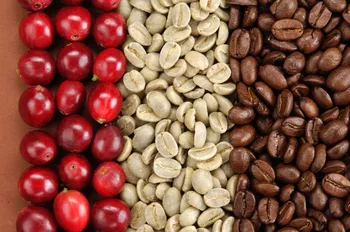 Arabica beans make up about 60% of the total world coffee consumption. Roasts made from Arabica beans are considered the higher quality and often pricier. Coffee shops typically serve Arabica bean blends. Overall, these beans have more acidity compared to Robusta beans. Arabica beans are grown throughout the Coffee Belt, but mostly in Latin America. Depending on where they grow in the three Coffee Belt regions they can have vastly different flavors. This will be explored later.
2. Robusta Beans
Arabica beans make up about 60% of the total world coffee consumption. Roasts made from Arabica beans are considered the higher quality and often pricier. Coffee shops typically serve Arabica bean blends. Overall, these beans have more acidity compared to Robusta beans. Arabica beans are grown throughout the Coffee Belt, but mostly in Latin America. Depending on where they grow in the three Coffee Belt regions they can have vastly different flavors. This will be explored later.
2. Robusta Beans
 rnRobusta coffee beans are the second most used coffee bean. These are what Americans are used to brewing at home and what we purchase in grocery stores. Supermarkets also sell blends with Robusta and Arabica beans too. Robusta beans contain twice as much caffeine as Arabica beans but look like little balls instead of the typical almond-shaped bean we visualize. These are mainly grown in Africa and Indonesia. They are easier to grow than Arabica beans because they can thrive in low or high altitude. The product tends to be harsher and more bitter due to the effects that roasting has on Robusta beans. However, they’re great for making espresso shots because of their deep flavor. This type of bean holds up better when you add cream and sugar, unlike Arabica beans whose flavor tends to change. Robusta beans are grown only on the Eastern Hemisphere and therefore appear only in two of the three regions in the Coffee Belt, which is explained later.
3. Liberica Beans
rnRobusta coffee beans are the second most used coffee bean. These are what Americans are used to brewing at home and what we purchase in grocery stores. Supermarkets also sell blends with Robusta and Arabica beans too. Robusta beans contain twice as much caffeine as Arabica beans but look like little balls instead of the typical almond-shaped bean we visualize. These are mainly grown in Africa and Indonesia. They are easier to grow than Arabica beans because they can thrive in low or high altitude. The product tends to be harsher and more bitter due to the effects that roasting has on Robusta beans. However, they’re great for making espresso shots because of their deep flavor. This type of bean holds up better when you add cream and sugar, unlike Arabica beans whose flavor tends to change. Robusta beans are grown only on the Eastern Hemisphere and therefore appear only in two of the three regions in the Coffee Belt, which is explained later.
3. Liberica Beans
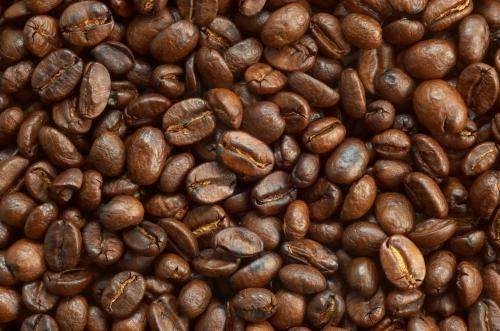 Liberica beans grow only in the Philippines. These beans have a floral, fruity aroma, but produce coffee that has a full body and woody, smoky flavor. A shortage of Arabica beans in 1890 resulted in the U.S importing Liberica beans from the Philippines. This continued until they claimed independence and the U.S stopped the trade.
4. Excelsa
Liberica beans grow only in the Philippines. These beans have a floral, fruity aroma, but produce coffee that has a full body and woody, smoky flavor. A shortage of Arabica beans in 1890 resulted in the U.S importing Liberica beans from the Philippines. This continued until they claimed independence and the U.S stopped the trade.
4. Excelsa
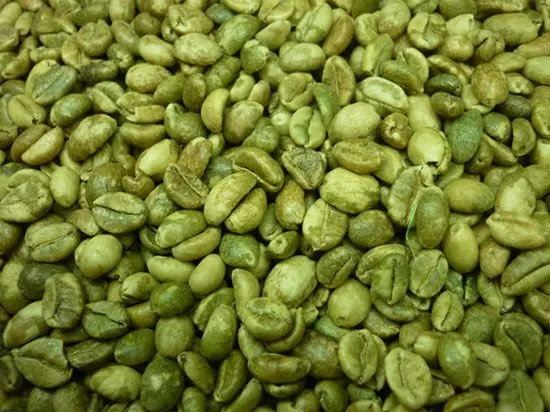 Excelsa coffee beans aren’t used very widely; they represent only 7% of the world’s coffee consumption. They grow in Southeast Asia and are considered a genus of Liberica beans. However, the flavor is more tart and fruity.
What about the Roasting Spectrum?
Most retail coffee sellers provide a multitude of coffee blends. These variations are often divided between light roasts, medium roasts, and dark roasts. The length of time a bean is roasted determines the slight difference in caffeine level, how acidic your coffee is, how much body it has, and sometimes the intensity of the flavor.
Which Bag to Buy
Now you know where coffee beans come from and the differences between the roasts. Now, how do you select the right blend for you? Where your coffee comes from determines the base flavors of the coffee. The Coffee Belt helps determine the three main coffee-growing regions. The Latin American region produces coffee that has chocolate and nutty tones. These tend to be Arabica beans. Fruity and floral coffees are attributed to the Africa/Arabia region. Herbal, spiced, or earthy coffees are grown in the Asia/Pacific region. These last two regions are where Robusta beans are grown, but Arabica beans are also grown here.
What is a Blend?
A blend is a bag of coffee that has beans from two or more countries and sometimes more than one region. It can be as complex as a blend from 8 countries, but the average roaster uses about 4. The percentage of each type changes the flavor of the blend as well. For example, you could have a coffee blend made with beans from Mexico and Brazil. The coffee would taste different if it were an 80%-20% blend or a 60%-40% blend. If you want a more specific cultural coffee experience, try getting a single-origin coffee.
Conclusion
Discover your personal preferences for what kinds of flavors you want to taste in your cup of coffee and what roast you prefer. Most coffee companies outline the origins of their coffee beans either on the bag or on their website. Now that you know more about coffee beans, you can choose the right blend to make your morning!
Excelsa coffee beans aren’t used very widely; they represent only 7% of the world’s coffee consumption. They grow in Southeast Asia and are considered a genus of Liberica beans. However, the flavor is more tart and fruity.
What about the Roasting Spectrum?
Most retail coffee sellers provide a multitude of coffee blends. These variations are often divided between light roasts, medium roasts, and dark roasts. The length of time a bean is roasted determines the slight difference in caffeine level, how acidic your coffee is, how much body it has, and sometimes the intensity of the flavor.
Which Bag to Buy
Now you know where coffee beans come from and the differences between the roasts. Now, how do you select the right blend for you? Where your coffee comes from determines the base flavors of the coffee. The Coffee Belt helps determine the three main coffee-growing regions. The Latin American region produces coffee that has chocolate and nutty tones. These tend to be Arabica beans. Fruity and floral coffees are attributed to the Africa/Arabia region. Herbal, spiced, or earthy coffees are grown in the Asia/Pacific region. These last two regions are where Robusta beans are grown, but Arabica beans are also grown here.
What is a Blend?
A blend is a bag of coffee that has beans from two or more countries and sometimes more than one region. It can be as complex as a blend from 8 countries, but the average roaster uses about 4. The percentage of each type changes the flavor of the blend as well. For example, you could have a coffee blend made with beans from Mexico and Brazil. The coffee would taste different if it were an 80%-20% blend or a 60%-40% blend. If you want a more specific cultural coffee experience, try getting a single-origin coffee.
Conclusion
Discover your personal preferences for what kinds of flavors you want to taste in your cup of coffee and what roast you prefer. Most coffee companies outline the origins of their coffee beans either on the bag or on their website. Now that you know more about coffee beans, you can choose the right blend to make your morning!Further reading
Further Reading
Article
What Is Moroccan Hash? A Beginnerâs Guide to the Iconic Concentrate
Moroccan hash has long held a legendary status among cannabis enthusiasts, known for its rich aroma, smooth texture, and traditional crafting methods passed down through generations. For beginners curious about this iconic concentrate, understanding its origins, production process, and effects can help you appreciate why it remains one of the most sought-after forms of cannabis worldwide. Moroccan hash, often called âMoroccan hashish,â is a cannabis concentrate made by se
November 14, 2025
Article
How Ice Baths Boost Circulation and Immune Function
In recent years, ice bathsâalso known as cold water immersionâhave gained popularity among athletes, wellness enthusiasts, and even everyday individuals looking for a natural way to improve health. While plunging into freezing water may sound daunting, the benefits for circulation and immune function are well documented. Letâs explore how this practice works and why it could be a valuable addition to your wellness routine. The Circulatory Boost When you step into an ice
August 26, 2025
Article
Maintaining Proper Water Chemistry: The Role of Automatic Chemical Feeders
Keeping your pool water crystal clear and safe requires more than just regular cleaningâit demands balanced water chemistry. From pH levels to chlorine content, every chemical in the water plays a vital role in maintaining hygiene and swimmer comfort. One of the most efficient ways to manage water chemistry is through the use of automatic chemical feeders. Automatic chemical feeders are devices designed to consistently distribute the correct amount of chemicals, such as chl
July 24, 2025
Article
Methodist Le Bonheur Healthcareâs Ultimate Guide to Reducing Stress in 2025
Photo Credit: https://unsplash.com/photos/woman-biting-pencil-while-sitting-on-chair-in-front-of-computer-during-daytime--2vD8lIhdnw Stress has become a defining challenge in todayâs fast-paced and interconnected world. From the demands of work-life balance to navigating the complexities of technology and relationships, managing stress has never been more important. Recognizing its subtle signs, understanding its far-reaching impact, and embracing effective strategies to co
July 3, 2025