What is an electric car and how does it work?
 The invention of electric vehicles has been done decades ago, but it came into consideration in the 21st century to meet global issues like pollution, global warming, and exhaustion of natural and non-renewable resources caused by the vehicle powered by an internal combustion engine. Zero- emission electric vehicles are the only possible and practical substitutes for vehicles leaving carbon footprints and other environmental-related problems.
The major source of air pollution in India and other countries around the globe is from emissions from transportation. Many countries including India have taken the initiative of replacing current transportation with the concept of electric vehicles. It is estimated that the global share of electric vehicles will increase from 2% in 2016 to 22% in 2030.
An electric vehicle is classified into three major categories out of which fuel cell vehicles that use hydrogen gas for electricity generation need more development and other one is hybrid, but it does not operate fully on electricity it also uses fuel to power a vehicle, so the last one we left with is battery EVs which has on-board rechargeable electricity storage system (RESS).rnThe onboard rechargeable electricity storage system is charged by an external source known as Electric Vehicle Chargers whenever the vehicle is stationary and gets disconnected when the vehicle is fully charged, or the vehicle is in motion.
The invention of electric vehicles has been done decades ago, but it came into consideration in the 21st century to meet global issues like pollution, global warming, and exhaustion of natural and non-renewable resources caused by the vehicle powered by an internal combustion engine. Zero- emission electric vehicles are the only possible and practical substitutes for vehicles leaving carbon footprints and other environmental-related problems.
The major source of air pollution in India and other countries around the globe is from emissions from transportation. Many countries including India have taken the initiative of replacing current transportation with the concept of electric vehicles. It is estimated that the global share of electric vehicles will increase from 2% in 2016 to 22% in 2030.
An electric vehicle is classified into three major categories out of which fuel cell vehicles that use hydrogen gas for electricity generation need more development and other one is hybrid, but it does not operate fully on electricity it also uses fuel to power a vehicle, so the last one we left with is battery EVs which has on-board rechargeable electricity storage system (RESS).rnThe onboard rechargeable electricity storage system is charged by an external source known as Electric Vehicle Chargers whenever the vehicle is stationary and gets disconnected when the vehicle is fully charged, or the vehicle is in motion.
 Electric Vehicle Charger The onboard storage system includes three methods to store power. Chemical storage in on-board batteries typically in the lithium-ion battery, kinetic energy in the flywheel, and the third method is static energy in onboard high-capacity capacitors also called supercapacitors (SP).
Out of all the three methods, the electrochemical conversions are easy to reserve, allowing electric energy to be stored in chemical form. This can be one of the reasons why most of the electric vehicle chemical batteries mostly lithium-ion batteries.
Manufacturer of Battery charging vehicles uses lithium-ion batteries because lithium-ion batteries have higher energy density (the amount of energy stored in a given system per unit volume), power density, and durability. But it has problems too firs of all it is expensive and can get damaged or break down at a certain temperature. To operate safely and efficiently batteries should be used in a safe temperature and voltage range. Now the lithium-ion battery price is coming down, and if used safely, it is the most suitable battery to power your vehicle’s electric motor.
Vehicle electric motor, which brings your vehicle in motion, which is generally a DC motor, an electric motor can deliver maximum torque over a wide range of RPM that can exceed the performance of the same powered internal combustion engine.
How Does an Electric Car Works
Electric Vehicle Charger The onboard storage system includes three methods to store power. Chemical storage in on-board batteries typically in the lithium-ion battery, kinetic energy in the flywheel, and the third method is static energy in onboard high-capacity capacitors also called supercapacitors (SP).
Out of all the three methods, the electrochemical conversions are easy to reserve, allowing electric energy to be stored in chemical form. This can be one of the reasons why most of the electric vehicle chemical batteries mostly lithium-ion batteries.
Manufacturer of Battery charging vehicles uses lithium-ion batteries because lithium-ion batteries have higher energy density (the amount of energy stored in a given system per unit volume), power density, and durability. But it has problems too firs of all it is expensive and can get damaged or break down at a certain temperature. To operate safely and efficiently batteries should be used in a safe temperature and voltage range. Now the lithium-ion battery price is coming down, and if used safely, it is the most suitable battery to power your vehicle’s electric motor.
Vehicle electric motor, which brings your vehicle in motion, which is generally a DC motor, an electric motor can deliver maximum torque over a wide range of RPM that can exceed the performance of the same powered internal combustion engine.
How Does an Electric Car Works
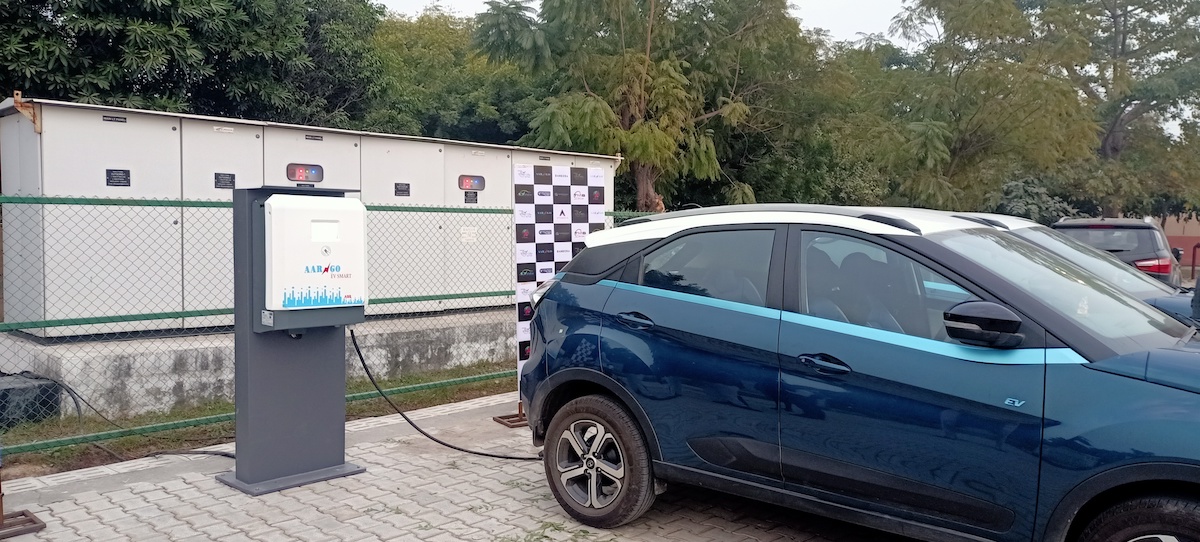 An all-electric vehicle in India or an EV has a rechargeable electrical energy storage onboard that works as a source of energy. For the electric motor, which moves or drives the vehicle. It does not have any conventional internal combustion (IC) engine that burns fuel or gas for the propulsion of the vehicle. An EV does not burn any fuel for propulsion thus it does not have any tailpipe exhaust.
An electric vehicle in India can be charged using a charging unit called EV chargers plugged into an external source of electric power. You can charge your EV using a slandered 120v outlet at home. You can also charge your EV at a dedicated charging station that will charge a vehicle faster than a home charger. While you are outdoors by paying some extra then that costs you charging at home. EV vehicles in India also use a regenerative braking system, which generates electricity by slowing down the vehicle when applied brake. The energy generated from the regenerative braking system is either stored in batteries or directly used by vehicles.
The range of an electric vehicles depends on the vehicle itself. Because every model or company has different batteries that have a different range. And, it also depends on the performance of the vehicle. An all-electric vehicle can run non-stop for a normal journey that is around 180km. Unless the weather conditions or not extreme because of extreme temperature.
Working of an electric vehicle or EV
An all-electric vehicle in India or an EV has a rechargeable electrical energy storage onboard that works as a source of energy. For the electric motor, which moves or drives the vehicle. It does not have any conventional internal combustion (IC) engine that burns fuel or gas for the propulsion of the vehicle. An EV does not burn any fuel for propulsion thus it does not have any tailpipe exhaust.
An electric vehicle in India can be charged using a charging unit called EV chargers plugged into an external source of electric power. You can charge your EV using a slandered 120v outlet at home. You can also charge your EV at a dedicated charging station that will charge a vehicle faster than a home charger. While you are outdoors by paying some extra then that costs you charging at home. EV vehicles in India also use a regenerative braking system, which generates electricity by slowing down the vehicle when applied brake. The energy generated from the regenerative braking system is either stored in batteries or directly used by vehicles.
The range of an electric vehicles depends on the vehicle itself. Because every model or company has different batteries that have a different range. And, it also depends on the performance of the vehicle. An all-electric vehicle can run non-stop for a normal journey that is around 180km. Unless the weather conditions or not extreme because of extreme temperature.
Working of an electric vehicle or EV
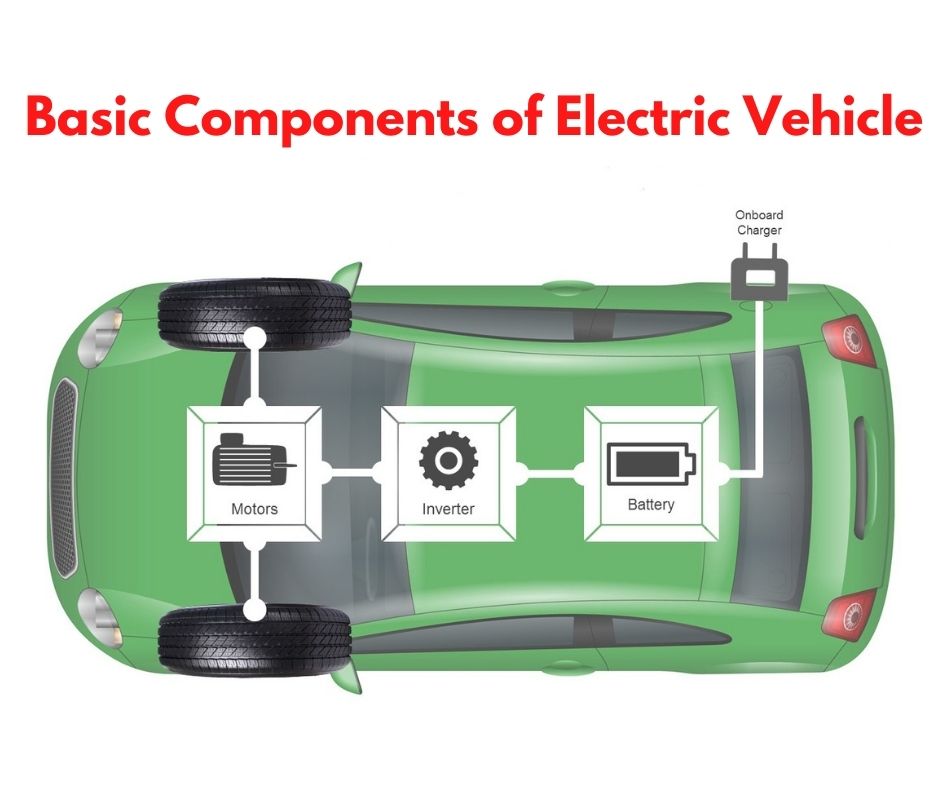 rnAll-electric vehicle has four basic components that make an electric vehicle work or move.
1. Energy storage units (high capacity batteries)rn2. Inverterrn3. AC/DC motorrn4. Controller
Energy storage units are the high-capacity batteries or supercapacitors that store the energy onboard. Currently, the most common method used by electric vehicle manufacturers is storing energy in chemical form; The battery work as a source of power to the electric motor in the vehicle. All the batteries in the vehicle are managed by BMS (Battery Management System).
The inverter is a device that converts the DC (direct current) to AC (alternating current) for the AC motor. The battery supply the power in direct current thus an inverter required to convert it to alternating current.rnElectric Motor, the electric vehicle manufacturers uses both alternating currents (AC) motor and direct current (DC). The motor in electric vehicles converts electrical energy to mechanical energy. The mechanical energy generated by an electric motor is transferred to the wheels by a single-speed transmission.
The controller acts as a gateway to the motor and controls the flow of the electrical energy delivered by the batteries. AC Motor controls the speed of the electric motor and it also controls the energy required by other components. It is the brain of the electric vehicle.
Other components that contribute to the working of an electric vehicle
1. Charging portrn2. On-board chargerrn3. Thermal system
The charging port is used to charge the onboard chemical batteries by connecting to an external energy source.rnOn-board chargers, some of the vehicles have an alternating current motor, which can be used for the regeneration of electrical energy. The energy generated by an AC motor is first converted into a direct current. By the onboard charger and stored in batteries or used by vehicles directly. This technology has increased the range of EVs.
The thermal system, the electric motor produces heat, which leads to more use of energy and reduces the range of the vehicle. The cooling system helps in maintaining the operating temperature for an electric motor, and other components. These components work together to make an electric car work or run.
rnAll-electric vehicle has four basic components that make an electric vehicle work or move.
1. Energy storage units (high capacity batteries)rn2. Inverterrn3. AC/DC motorrn4. Controller
Energy storage units are the high-capacity batteries or supercapacitors that store the energy onboard. Currently, the most common method used by electric vehicle manufacturers is storing energy in chemical form; The battery work as a source of power to the electric motor in the vehicle. All the batteries in the vehicle are managed by BMS (Battery Management System).
The inverter is a device that converts the DC (direct current) to AC (alternating current) for the AC motor. The battery supply the power in direct current thus an inverter required to convert it to alternating current.rnElectric Motor, the electric vehicle manufacturers uses both alternating currents (AC) motor and direct current (DC). The motor in electric vehicles converts electrical energy to mechanical energy. The mechanical energy generated by an electric motor is transferred to the wheels by a single-speed transmission.
The controller acts as a gateway to the motor and controls the flow of the electrical energy delivered by the batteries. AC Motor controls the speed of the electric motor and it also controls the energy required by other components. It is the brain of the electric vehicle.
Other components that contribute to the working of an electric vehicle
1. Charging portrn2. On-board chargerrn3. Thermal system
The charging port is used to charge the onboard chemical batteries by connecting to an external energy source.rnOn-board chargers, some of the vehicles have an alternating current motor, which can be used for the regeneration of electrical energy. The energy generated by an AC motor is first converted into a direct current. By the onboard charger and stored in batteries or used by vehicles directly. This technology has increased the range of EVs.
The thermal system, the electric motor produces heat, which leads to more use of energy and reduces the range of the vehicle. The cooling system helps in maintaining the operating temperature for an electric motor, and other components. These components work together to make an electric car work or run.Further reading
Further Reading
Article
How Steel Manufacturing Drives Infrastructure Development in India
Indiaâs infrastructure growth has accelerated significantly over the past two decades. From expanding highways and railway networks to large-scale urban development and industrial corridors, the backbone of these projects is steel. Steel manufacturing plays a vital role in enabling the country to build durable structures, modern transportation systems, and energy facilities that support economic progress. The availability of specialized steel grades and precision-manufactur
March 10, 2026
Article
What Are Concierge Services? A Complete Guide to Luxury Lifestyle Assistance
Modern life moves quickly, and managing daily responsibilities alongside professional commitments can often feel overwhelming. This is where concierge services come into play. Designed to simplify life and provide personalized support, concierge services have become increasingly popular among professionals, businesses, and families who value convenience, efficiency, and premium lifestyle support. From handling routine errands to organizing exclusive experiences, concierge ser
March 6, 2026
Article
How Much Money You Can Make Selling Diabetic Supplies
Introduction The world of healthcare often leaves behind unused items, and diabetic supplies are among them. Many people find themselves with extra test strips, lancets, or glucose meters due to changes in prescriptions, insurance coverage, or simply overstocking. This situation raises a natural question: how much money can someone make by selling these supplies? While the answer varies, the journey of understanding this market reveals both opportunities and limitations. The
March 3, 2026
Article
How Solar Appointments Drive Brand Expansion and Customer Trust
The Evolution of the Doorstep Handshake In the early days of the renewable energy boom, the transition to solar power was often viewed as a purely transactional event. Homeowners saw panels on a roof, signed a contract, and hoped for the best. However, as the industry matured, the focus shifted from the hardware itself to the human connection that precedes the installation. This shift has turned a simple meeting into a cornerstone of business growth. The journey toward a sust
February 18, 2026